
Birds in the EU are less abundant than a few decades ago. Since 2000, the number of common birds is estimated to have declined by 10%.
The occurrence of common birds is an indicator of biodiversity because many of them require specific habitats to breed and find food. These habitats are often also home to many threatened plant and animal species. In particular, the population of common farmland birds is in continued decline ( 24% since 2000). However, after many years of decline, it appears that the numbers of common birds have started to stabilise.
The population of common forest birds is even estimated to have increased by 3% between 2000 and 2020.
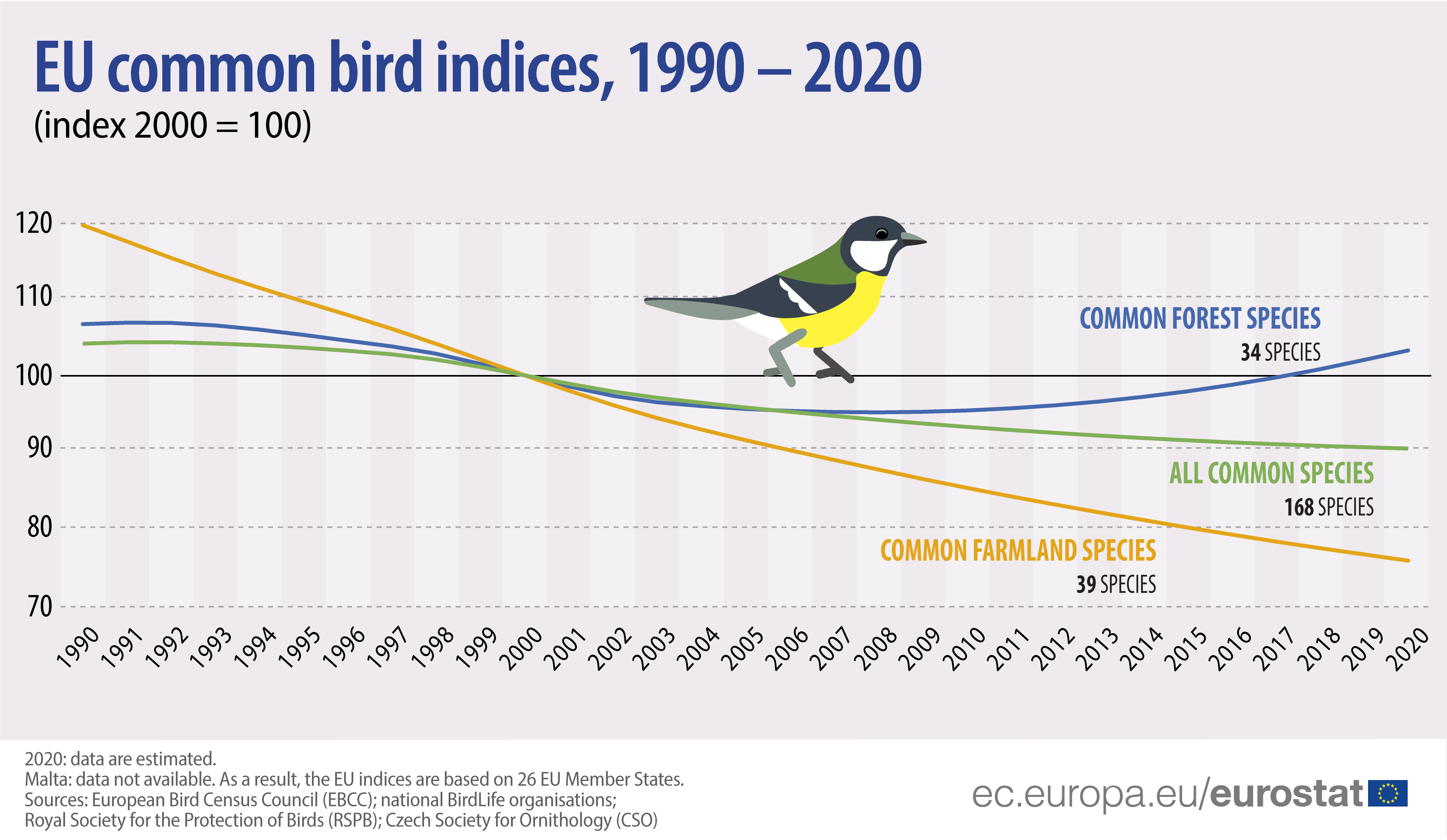
Source dataset: env_bio3 (sources: European Bird Census Council (EBCC); national BirdLife organisations; Royal Society for the Protection of Birds (RSPB); Czech Society for Ornithology (CSO))
The major losses in populations of common farmland bird species could be reversed by the Farm to Fork Strategy, which seeks a reduction of 50% in the overall use of and risk from chemical pesticides by 2030, and the EU Biodiversity Strategy for 2030, aiming to return at least 10% of agricultural land to land under high-diversity landscape features and enlarge the area under organic farming so that it accounts for 25% of the EU’s total farmed land by 2030.
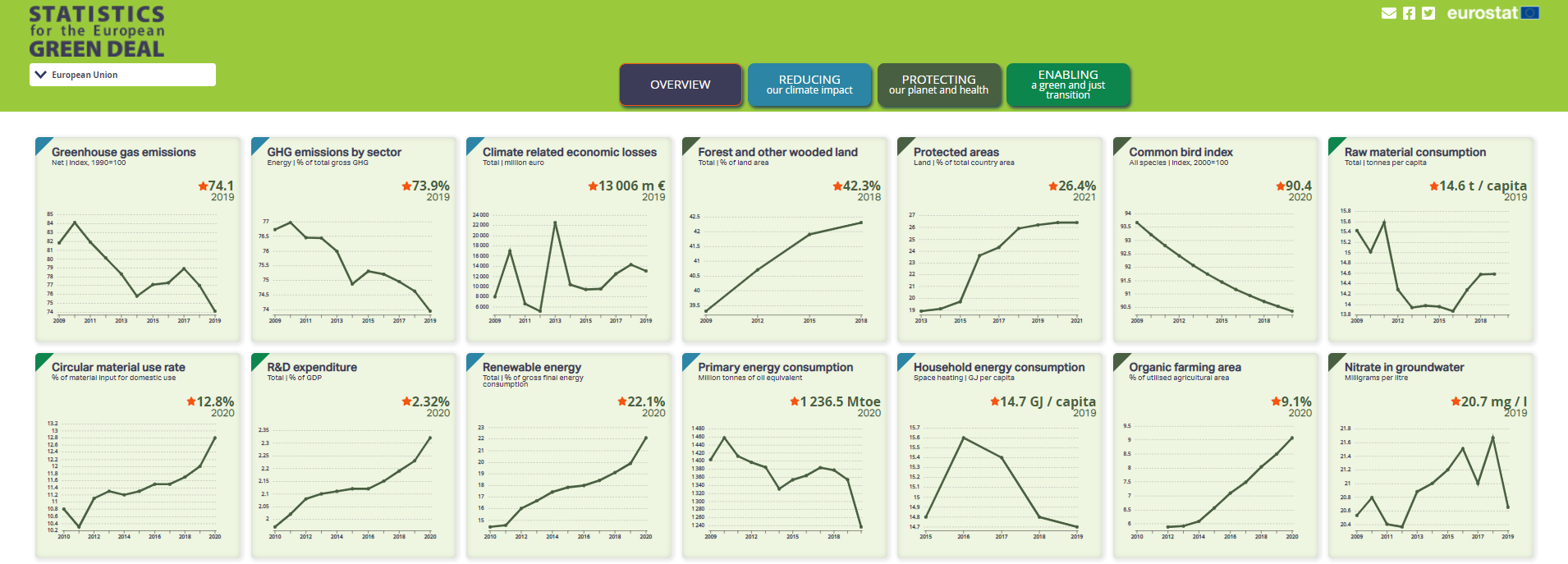
These strategies form part of the European Green Deal initiatives, which is one of the 6 European Commission priorities for 2019 – 24. To learn more, you can take a look at the Eurostat interactive visualisation tool which shows statistics relevant for the European Green Deal. It presents an overview of 26 indicators for the EU, the Member States and EFTA countries, divided into 3 main topics: Reducing our climate impact, protecting our planet & health and enabling a green & just transition.
Discover our interactive visualisation tool here:
For more information:
- Statistics for the European Green Deal interactive visualisation tool
- Statistics Explained article on biodiversity statistics
- Dedicated section on environmental statistics
- Dedicated section on biodiversity statistics
Methodological notes:
- Bird monitoring in the EU is conducted under the umbrella of the PanEuropean Common Bird Monitoring Scheme. The scheme helps standardize data collection and data analysis practices across countries and produces three indices of the populations of common birds – the index for all common birds (168 species), the index for common farmland birds (39 species included in the index of common birds) and the index for common forest birds (34 species included in the index of common birds).
- 2020: data are estimated.
- Malta: data not available. As a result, the EU indices are based on 26 EU Member States.
To contact us, please visit our User Support page.
For press queries, please contact our Media Support.