Accessibility tools
Service tools
Language selector
Navigation path

The Commission welcomes the USA's acceptance of an government-to-government approach to tackling tax evaders and implementing the US Foreign Account Tax Compliance Act (FATCA).
This more business-friendly arrangement for EU financial institutions is the result of intense discussions with the USA, following a letter sent by the Commission and EU Presidency to the US tax authorities in April 2011 (see IP/11/413 ).
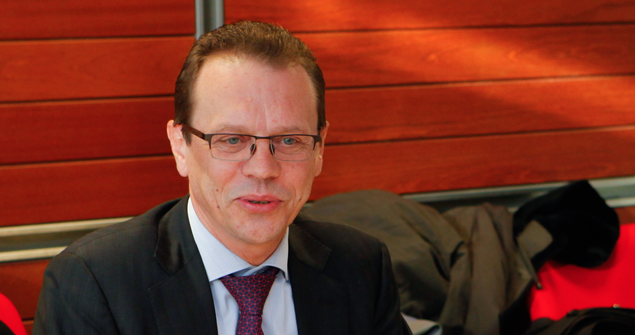
Algirdas Šemeta, EU Commissioner for Taxation said: "The EU and USA share a strong objective: to tackle trans-border tax evasion and ensure national treasuries can collect what they are due. I am confident that this new development will pave the way to achieve this in a business friendly manner."
06/02/2012
Tax Coordination: TPG discusses FATCA, VAT and national tax reforms
Improving and accelerating tax coordination in key areas that can contribute to economic stability and growth is the focus of today's meeting of the Tax Policy Group (TPG) in Brussels.Algirdas Šemeta, Commissioner for Taxation, Customs, Anti-Fraud and Audit, is chairing the TPG, which brings together high level representatives of EU Finance Ministers.

10/11/2011
Another clean bill of health for EU accounts; auditors find improvements in many payment areas
Brussels, 10 November 2011 - For the fourth year in a row, the EU's annual accounts have received a clean bill of health from its external auditors. As for EU spending,
the overall error rate is once again below 4%.
This means that the vast majority (at least 96%) of total payments made in 2010 were free from quantifiable error.
Algirdas Šemeta, Commissioner for Taxation, Customs, Audit and Anti-fraud said: "The Court of Auditors report confirms that we are on the right track, although that doesn't mean that we will relax our efforts to safeguard the EU budget. We are currently preparing the next generation of EU funds. This is a chance to further improve the quality of EU spending and to get more value for money from the EU budget, especially in policies managed together with Member States. It is also a chance to show to all tax-payers that the Commission is doing everything it can to ensure that their money is properly controlled and spent."

03/02/2012
ES lėšos – Lietuvos muitinės mobiliajai rentgeno sistemai
Lietuvos muitinė įsigijo naują mobiliąją rentgeno įrangą, kurią iš dalies finansavo Europos kovos su sukčiavimu tarnyba. Pagal programą Hercule Lietuvai buvo skirta pusė įrangai įsigyti reikalingos sumos – 1 milijonas eurų. Tai viena iš Europos Komisijos priemonių pagal kovos su cigarečių ir alkoholio kontrabanda per Rytų sieną veiksmų planą.Už kovą su sukčiavimu atsakingas Europos Komisijos narys Algirdas Šemeta sakė: „Tai Europos investicija į Lietuvos vartotojų ir verslininkų apsaugą. Šalyje cigarečių kontrabandos per Rytų sieną rizika yra gana didelė. Šis reiškinys žalingas visiems: apvagiamas sąžiningai mokesčius mokantis verslas, keliama grėsmė sveikatai, dėl nesurenkamų mokesčių trūksta lėšų sveikatos ir socialinei apsaugai, švietimui. Teikdama finansavimą pagal specialias programas, ES padeda muitinėms apsirūpinti veiksmingos kovos su kontrabanda priemonėmis."

10/05/2011
Statement of Commissioner Šemeta on the European Parliament's vote on discharge
Following the vote of the European Parliament granting discharge to the European Commission for the 2009 budget, Commissioner Algirdas Šemeta, in charge of Audit and Discharge, said:"I warmly welcome the granting of discharge by the European Parliament to the Commission for the 2009 budget. This is proof that the excellent cooperation we have had with the European Parliament, in particular with the rapporteurs to ensure a common understanding on the issue and the way forward for better financial management of the EU budget, is paying off.The discussions we had this morning clearly showed the Commission and the Parliament - together with the Council - need to reflect on how the responsibility of the various financial actors can be better defined. The responsibility of EU Member States there is crucial. To this end, the Commission has put forward proposals to revise the EU's Budget Financial Regulation.In addition, the need to simplify our rules and financial processes is a top priority of our discussions on the Multi-Annual financial Framework post-2013. I am personally convinced that combining simpler rules for managing our EU-funded projects with strong control mechanisms is key for all actors involved, ranging from the beneficiaries to Member States and EU institutions and bodies".

06/02/2012
Third quarter 2011 compared with second quarter 2011 Euro area government debt down to 87.4% of GDP EU27 up to 82.2%
Today, Eurostat publishes for the first time a News Release with quarterly data on government debt. This new euroindicator complements the annual data already published in the twice yearly EDP notifications by providing a more short term trend in government debt for the euro area and the EU as well as for the Member States. This new quarterly euro-indicator will be issued around four months after the end of the quarter of reference1.
At the end of the third quarter of 2011, the government debt2 to GDP ratio3 in the euro area4 (EA17) stood at 87.4%, down compared with 87.7% at the end of the second quarter of 2011. In the EU274 the ratio increased from 81.7% to 82.2%. Compared with the third quarter of 2010, the government debt to GDP ratio rose in both the euro area (from 83.2% to 87.4%) and the EU27 (from 78.5% to 82.2%).At the end of the third quarter of 2011, securities other than shares accounted for 79.3% of euro area and 79.7% of EU27 general government debt. Loans made up 18.0% of euro area and 15.8% of EU27 government debt. Currency and deposits represented 2.8% of euro area and 3.8% of EU27 government debt.Due to the involvement of EU governments in financial assistance to certain Member States, and in order to obtain a more complete picture of the evolution of government debt, quarterly data on intergovernmental lending (IGL)5 is also published. The share of IGL in GDP at the end of the third quarter of 2011 is similar for both the euro area and the EU27, amounting to 0.8% and 0.6% of GDP respectively.These data are released by Eurostat, the statistical office of the European Union.
SOCIAL MEDIA