


1.1. Contact organisation
Statistics Estonia
1.2. Contact organisation unit
Economic and Environmental Statistics Department
1.3. Contact name
Confidential because of GDPR
1.4. Contact person function
Confidential because of GDPR
1.5. Contact mail address
Tatari 51, 10134 Tallinn Estonia
1.6. Contact email address
Confidential because of GDPR
1.7. Contact phone number
Confidential because of GDPR
1.8. Contact fax number
Confidential because of GDPR
2.1. Data description
The Labour Costs Survey (LCS) has been carried out six times in Estonia, but the survey is still not very known or used in Estonia.
Labour cost statistics provide a comprehensive and detailed picture of the level, structure and short-term development of labour costs in the different sectors of economic activity. All statistics are based on a harmonised definition of labour costs.
Structural information on labour costs is collected through four-yearly Labour Cost Surveys (LCS), which provide details on the level and structure of labour cost data, hours worked and hours paid. LCS results are available for the reference years 2000, 2004, 2008, 2012, 2016 and 2020.
The data are collected by stratified random samples of enterprises with at least 1 employee. The stratification is based on economic activity, size category and region. Information on staff, hours worked and hours paid is quoted in aggregate and separately for full- and part-time employees.
2.2. Classification system
Estonian Classification of Economic Activities (EMTAK 2008) based on NACE Rev. 2.
Economic activity is broken down at the division level of the NACE classification.
2.3. Coverage - sector
Economically active units – all enterprises, institutions, and organizations.
NACE Rev. 2 Sections A to S including section O.
Six size categories are distinguished: 1 to 9 employees, 10 to 49 employees, 50 to 249 employees, 250 to 499 employees, 500 to 999 employees, and units having at least 1 000 employees.
2.4. Statistical concepts and definitions
Labour Costs refer to the total expenditure borne by employers for the purpose of employing staff. They include employee compensation, which is mainly comprised of gross wages and salaries in cash and in-kind and employers' social security contributions, vocational training costs, other expenditures such as recruitment costs and spending on working clothes, and employment taxes regarded as labour costs minus subsidies received.
These labour cost components and their elements are defined in Commission Regulation (EC) No 1737/2005 of 21 October 2005, implementing Council Regulation (EC) No 530/1999 concerning structural statistics on earnings and labour costs as regards the definition and transmission of information on labour costs.
For some variables, data is not available due to missing elements in particular components.
Hourly labour costs are annual labour costs divided by the number of hours worked during the reference year.
Monthly labour costs per employee are the annual labour costs divided by 12 and by the average number of employees during the year (converted into full-time equivalents).
2.5. Statistical unit
The statistical unit is the enterprise.
2.6. Statistical population
List of economically active units (excl. economic units without salaried employees). The list is generated from the Business Register for Statistical Purposes.
LCS applies to all activities in sections A to S (including section O) of NACE Rev.2 and represents all statistical units occupying 1 and more employees.
2.7. Reference area
Estonia as a whole.
2.8. Coverage - Time
Labour costs survey has been carried out in Estonia since 2000.
2.9. Base period
Not applicable.
3.1. Source data
Survey Data
The total population is 85,000 objects. The sample includes 6,000 objects. All statistical units with 50 and more employees are surveyed. For enterprises with less than 50 employees, stratified simple random sampling by a 2-digit code of economic activity (EMTAK) and size group of enterprise is used.
Administrative Data
Administrative data from the Estonian Tax and Customs Board are used.
Data from Other Statistical Activities
Data from the survey “Wages and Salaries” are used.
3.2. Frequency of data collection
In every four years
3.3. Data collection
Data are collected and the submission of questionnaires is monitored through eSTAT (the web channel for electronic data submission). The questionnaires have been designed for independent completion in eSTAT and include instructions and controls. The questionnaires and information about data submission are available on Statistics Estonia’s website at Data submission.
Since 2016, the data are pre-filled with administrative data and data of statistical activity “Wages and salaries”.
Data are collected with the official statistics questionnaire “Tööandja cultured töötajatele”.
3.4. Data validation
Arithmetic and qualitative controls are used in the validation process, including checking that the population coverage and response rates are as required, comparison with the data of previous periods or other surveys, and with administrative data sources.
3.5. Data compilation
After data review, the data of non-responding enterprises are replaced within the completely enumerated part of the population. For estimating population totals, the sample data are grossed up separately in each stratum. The expansion factor is the ratio of each subpopulation to the number of respondents in that stratum. After that, the aggregate indicators are calculated.
3.6. Adjustment
Not applicable.
4.1. Quality assurance
To assure the quality of processes and products, Statistics Estonia applies the EFQM Excellence Model, the European Statistics Code of Practice and the Quality Assurance Framework of the European Statistical System (ESS QAF). Statistics Estonia is also guided by the requirements in § 7. “Principles and quality criteria of producing official statistics” of the Official Statistics Act.
4.2. Quality management - assessment
Only fully consistent data are published.
5.1. Relevance - User Needs
Main users are Eurostat and other EU institutions. Other users are Ministry of Finance, Ministry of Social Affairs, Ministry of Economic Affairs, banks, scientific institutions, foreign and local employer’s associations, foreign entrepreneurs, trade unions, media and Statistical Office of Estonia itself. Above-mentioned users are more interested in the short-term average labour costs per hour worked and the average labour costs per employee.
5.2. Relevance - User Satisfaction
There is no information on user satisfaction. The survey on the user satisfaction on this topic is not carried out.
5.3. Completeness
Not provided.
5.3.1. Data completeness - rate
In compliance with the rules (regulations).
See below.
6.1. Accuracy - overall
The type of survey and the data collection methods ensure sufficient coverage and timeliness.
6.2. Sampling error
See 6.2.1.
6.2.1. Sampling error - indicators
Coefficients of variations broken down by economic activity and size classes are presented in the annex I below. For obtaining coefficients of variances the program CLAN was used. In the non-response model adopted it was assumed that sample units had equal response probabilities within strata. It means that for estimating the variance  of the estimator
 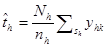 of the stratum total th the formula

was used. Here Nh denotes the number of population units in the stratum h, h=1, 2, …, H, nh the number of responded units in the stratum h, y is a study variable, yhk the value of y measured on the unit k of the stratum h and  denotes summing over the set of respondents of the stratum h. The estimator for the total variance
  has the following form:
  , standard error
  and the coefficient of variation is calculated as follows: CV=
 .
.
Variances were considered to be 0 for the strata of completely enumerated part of the population, i.e. units with 50 and more employees.
Annex I
Total labour costs per employee (FTE) and its standard error and coefficient of variation
| Indicator | Total labour costs per employee, euros | Standard error of total labour costs per employee, euros | Coefficient of variation, % |
|---|---|---|---|
| Economic activity | |||
| TOTAL: Total - all NACE activities | 23553 | 188 | 0,8 |
| A01: Crop and animal production, hunting and related service activities | 19716 | 672 | 3,4 |
| A02: Forestry and logging | 21587 | 1869 | 8,7 |
| A03: Fishing and aquaculture | 23307 | 2363 | 10,1 |
| B05: Mining of coal and lignite | .. | .. | .. |
| B06: Extraction of crude petroleum and natural gas | . | . | . |
| B07: Mining of metal ores | .. | .. | .. |
| B08: Other mining and quarrying | 27083 | 1034 | 3,8 |
| B09: Mining support service activities | 29295 | 4191 | 14,3 |
| C10: Manufacture of food products | 19261 | 571 | 3,0 |
| C11: Manufacture of beverages | 27619 | 715 | 2,6 |
| C12: Manufacture of tobacco products | .. | .. | .. |
| C13: Manufacture of textiles | 16465 | 561 | 3,4 |
| C14: Manufacture of wearing apparel | 12600 | 417 | 3,3 |
| C15: Manufacture of leather and related products | 13322 | 393 | 2,9 |
| C16: Manufacture of wood and of products of wood and cork, except furniture; manufacture of articles of straw and plaiting materials | 22640 | 633 | 2,8 |
| C17: Manufacture of paper and paper products | 24793 | 731 | 2,9 |
| C18: Printing and reproduction of recorded media | 21108 | 853 | 4,0 |
| C19: Manufacture of coke and refined petroleum products | 23675 | 1617 | 6,8 |
| C20: Manufacture of chemicals and chemical products | 25088 | 1036 | 4,1 |
| C21: Manufacture of basic pharmaceutical products and pharmaceutical preparations | 26614 | 1805 | 6,8 |
| C22: Manufacture of rubber and plastic products | 22563 | 694 | 3,1 |
| C23: Manufacture of other non-metallic mineral products | 27302 | 858 | 3,1 |
| C24: Manufacture of basic metals | 27021 | 682 | 2,5 |
| C25: Manufacture of fabricated metal products, except machinery and equipment | 25139 | 1142 | 4,5 |
| C26: Manufacture of computer, electronic and optical products | 24519 | 889 | 3,6 |
| C27: Manufacture of electrical equipment | 23642 | 1241 | 5,2 |
| C28: Manufacture of machinery and equipment n.e.c. | 25713 | 804 | 3,1 |
| C29: Manufacture of motor vehicles, trailers and semi-trailers | 22367 | 927 | 4,1 |
| C30: Manufacture of other transport equipment | 26271 | 1246 | 4,7 |
| C31: Manufacture of furniture | 19238 | 572 | 3,0 |
| C32: Other manufacturing | 20480 | 900 | 4,4 |
| C33: Repair and installation of machinery and equipment | 25182 | 1043 | 4,1 |
| D35: Electricity, gas, steam and air conditioning supply | 35358 | 1551 | 4,4 |
| E36: Water collection, treatment and supply | 25021 | 698 | 2,8 |
| E37: Sewerage | 14779 | 1419 | 9,6 |
| E38: Waste collection, treatment and disposal activities; materials recovery | 22780 | 712 | 3,1 |
| E39: Remediation activities and other waste management services | . | . | . |
| F41: Construction of buildings | 22221 | 1350 | 6,1 |
| F42: Civil engineering | 26211 | 1104 | 4,2 |
| F43: Specialised construction activities | 18340 | 1217 | 6,6 |
| G45: Wholesale and retail trade and repair of motor vehicles and motorcycles | 24776 | 1317 | 5,3 |
| G46: Wholesale trade, except of motor vehicles and motorcycles | 28229 | 1226 | 4,3 |
| G47: Retail trade, except of motor vehicles and motorcycles | 17439 | 543 | 3,1 |
| H49: Land transport and transport via pipelines | 17571 | 844 | 4,8 |
| H50: Water transport | 30825 | 645 | 2,1 |
| H51: Air transport | 35333 | 2565 | 7,3 |
| H52: Warehousing and support activities for transportation | 27622 | 929 | 3,4 |
| H53: Postal and courier activities | 20175 | 694 | 3,4 |
| I55: Accommodation | 15430 | 569 | 3,7 |
| I56: Food and beverage service activities | 12750 | 438 | 3,4 |
| J58: Publishing activities | 28477 | 798 | 2,8 |
| J59: Motion picture, video and television programme production, sound recording and music publishing activities | 17972 | 1911 | 10,6 |
| J60: Programming and broadcasting activities | 32672 | 715 | 2,2 |
| J61: Telecommunications | 37246 | 1234 | 3,3 |
| J62: Computer programming, consultancy and related activities | 45793 | 1307 | 2,9 |
| J63: Information service activities | 35632 | 2326 | 6,5 |
| K64: Financial service activities, except insurance and pension funding | 43944 | 1728 | 3,9 |
| K65: Insurance, reinsurance and pension funding, except compulsory social security | 39492 | 895 | 2,3 |
| K66: Activities auxiliary to financial services and insurance activities | 39846 | 3890 | 9,8 |
| L68: Real estate activities | 15004 | 760 | 5,1 |
| M69: Legal and accounting activities | 24623 | 1007 | 4,1 |
| M70: Activities of head offices; management consultancy activities | 28752 | 1586 | 5,5 |
| M71: Architectural and engineering activities; technical testing and analysis | 24904 | 1023 | 4,1 |
| M72: Scientific research and development | 29019 | 1472 | 5,1 |
| M73: Advertising and market research | 29998 | 3168 | 10,6 |
| M74: Other professional, scientific and technical activities | 23306 | 1806 | 7,8 |
| M75: Veterinary activities | 19059 | 1658 | 8,7 |
| N77: Rental and leasing activities | 29296 | 1960 | 6,7 |
| N78: Employment activities | 20666 | 1086 | 5,3 |
| N79: Travel agency, tour operator reservation service and related activities | 17902 | 1713 | 9,6 |
| N80: Security and investigation activities | 17234 | 456 | 2,6 |
| N81: Services to buildings and landscape activities | 15567 | 526 | 3,4 |
| N82: Office administrative, office support and other business support activities | 24331 | 1848 | 7,6 |
| O84: Public administration and defence; compulsory social security | 29508 | 425 | 1,4 |
| P85: Education | 21888 | 488 | 2,2 |
| Q86: Human health activities | 27487 | 669 | 2,4 |
| Q87: Residential care activities | 15984 | 328 | 2,1 |
| Q88: Social work activities without accommodation | 15796 | 889 | 5,6 |
| R90: Creative, arts and entertainment activities | 18204 | 867 | 4,8 |
| R91: Libraries, archives, museums and other cultural activities | 18515 | 529 | 2,9 |
| R92: Gambling and betting activities | 28998 | 2022 | 7,0 |
| R93: Sports activities and amusement and recreation activities | 16499 | 1081 | 6,5 |
| S94: Activities of membership organisations | 20877 | 2294 | 11,0 |
| S95: Repair of computers and personal and household goods | 15134 | 1584 | 10,5 |
| S96: Other personal service activities | 12330 | 511 | 4,1 |
| T97: Activities of households as employers of domestic personnel | .. | .. | .. |
| T98: Undifferentiated goods- and services-producing activities of private households for own use | .. | .. | .. |
| U99: Activities of extraterritorial organisations and bodies | .. | .. | .. |
6.3. Non-sampling error
See below.
6.3.1. Coverage error
In the table below over-coverage rates broken down by 2-digit NACE Rev. 2 code are presented. Those rates are calculated as ratios of the number of nonactive units over the total number of units with 1+ employee in the register. The number of non-active units is estimated basing on the sample. Under-coverage of the sampling frame is caused by delay between selection of the sample and data collection. The sample was selected from the register updated in the end of the year 2020. The reference period was 2020 and the end-date of the data collection was set to the 1st of March 2021.
6.3.1.1. Over-coverage - rate
| Stratum |
Population size |
Over-coverage,% |
|---|---|---|
| Economic activity |
|
|
| TOTAL: Total - all NACE activities |
85548 |
2,1 |
| A01: Crop and animal production, hunting and related service activities |
1877 |
2,0 |
| A02: Forestry and logging |
1365 |
0,0 |
| A03: Fishing and aquaculture |
120 |
0,0 |
| B05: Mining of coal and lignite |
.. |
.. |
| B06: Extraction of crude petroleum and natural gas |
2 |
0,0 |
| B07: Mining of metal ores |
.. |
.. |
| B08: Other mining and quarrying |
108 |
0,0 |
| B09: Mining support service activities |
8 |
0,0 |
| C10: Manufacture of food products |
588 |
0,2 |
| C11: Manufacture of beverages |
80 |
0,0 |
| C12: Manufacture of tobacco products |
.. |
.. |
| C13: Manufacture of textiles |
255 |
0,0 |
| C14: Manufacture of wearing apparel |
440 |
8,6 |
| C15: Manufacture of leather and related products |
63 |
2,1 |
| C16: Manufacture of wood and of products of wood and cork, except furniture; manufacture of articles of straw and plaiting materials |
962 |
2,1 |
| C17: Manufacture of paper and paper products |
53 |
2,3 |
| C18: Printing and reproduction of recorded media |
278 |
1,7 |
| C19: Manufacture of coke and refined petroleum products |
4 |
0,0 |
| C20: Manufacture of chemicals and chemical products |
88 |
0,0 |
| C21: Manufacture of basic pharmaceutical products and pharmaceutical preparations |
9 |
0,0 |
| C22: Manufacture of rubber and plastic products |
186 |
2,1 |
| C23: Manufacture of other non-metallic mineral products |
232 |
0,0 |
| C24: Manufacture of basic metals |
16 |
0,0 |
| C25: Manufacture of fabricated metal products, except machinery and equipment |
1237 |
2,0 |
| C26: Manufacture of computer, electronic and optical products |
102 |
2,8 |
| C27: Manufacture of electrical equipment |
115 |
0,0 |
| C28: Manufacture of machinery and equipment n.e.c. |
163 |
0,0 |
| C29: Manufacture of motor vehicles, trailers and semi-trailers |
59 |
0,0 |
| C30: Manufacture of other transport equipment |
96 |
1,0 |
| C31: Manufacture of furniture |
662 |
5,3 |
| C32: Other manufacturing |
300 |
0,3 |
| C33: Repair and installation of machinery and equipment |
627 |
0,2 |
| D35: Electricity, gas, steam and air conditioning supply |
154 |
0,0 |
| E36: Water collection, treatment and supply |
55 |
0,0 |
| E37: Sewerage |
37 |
0,0 |
| E38: Waste collection, treatment and disposal activities; materials recovery |
138 |
1,8 |
| E39: Remediation activities and other waste management services |
4 |
0,0 |
| F41: Construction of buildings |
4073 |
1,1 |
| F42: Civil engineering |
822 |
0,0 |
| F43: Specialised construction activities |
5997 |
0,7 |
| G45: Wholesale and retail trade and repair of motor vehicles and motorcycles |
2768 |
1,6 |
| G46: Wholesale trade, except of motor vehicles and motorcycles |
5032 |
2,6 |
| G47: Retail trade, except of motor vehicles and motorcycles |
5100 |
5,4 |
| H49: Land transport and transport via pipelines |
3481 |
1,3 |
| H50: Water transport |
23 |
0,0 |
| H51: Air transport |
16 |
0,0 |
| H52: Warehousing and support activities for transportation |
1159 |
0,1 |
| H53: Postal and courier activities |
168 |
0,0 |
| I55: Accommodation |
649 |
0,3 |
| I56: Food and beverage service activities |
2188 |
3,8 |
| J58: Publishing activities |
281 |
0,4 |
| J59: Motion picture, video and television programme production, sound recording and music publishing activities |
596 |
0,0 |
| J60: Programming and broadcasting activities |
14 |
0,0 |
| J61: Telecommunications |
131 |
0,0 |
| J62: Computer programming, consultancy and related activities |
2573 |
1,6 |
| J63: Information service activities |
571 |
0,4 |
| K64: Financial service activities, except insurance and pension funding |
580 |
5,9 |
| K65: Insurance, reinsurance and pension funding, except compulsory social security |
18 |
5,6 |
| K66: Activities auxiliary to financial services and insurance activities |
311 |
9,3 |
| L68: Real estate activities |
9867 |
2,1 |
| M69: Legal and accounting activities |
3403 |
0,0 |
| M70: Activities of head offices; management consultancy activities |
2088 |
4,2 |
| M71: Architectural and engineering activities; technical testing and analysis |
1886 |
0,0 |
| M72: Scientific research and development |
211 |
0,0 |
| M73: Advertising and market research |
888 |
0,0 |
| M74: Other professional, scientific and technical activities |
1906 |
4,1 |
| M75: Veterinary activities |
115 |
0,0 |
| N77: Rental and leasing activities |
682 |
5,2 |
| N78: Employment activities |
657 |
9,8 |
| N79: Travel agency, tour operator reservation service and related activities |
378 |
10,5 |
| N80: Security and investigation activities |
64 |
0,0 |
| N81: Services to buildings and landscape activities |
1142 |
0,2 |
| N82: Office administrative, office support and other business support activities |
1018 |
4,3 |
| O84: Public administration and defence; compulsory social security |
294 |
3,4 |
| P85: Education |
2668 |
0,1 |
| Q86: Human health activities |
1554 |
0,0 |
| Q87: Residential care activities |
230 |
0,0 |
| Q88: Social work activities without accommodation |
376 |
0,0 |
| R90: Creative, arts and entertainment activities |
1108 |
0,1 |
| R91: Libraries, archives, museums and other cultural activities |
218 |
6,2 |
| R92: Gambling and betting activities |
15 |
0,0 |
| R93: Sports activities and amusement and recreation activities |
1950 |
0,7 |
| S94: Activities of membership organisations |
1874 |
3,6 |
| S95: Repair of computers and personal and household goods |
315 |
0,0 |
| S96: Other personal service activities |
3607 |
4,0 |
| T97: Activities of households as employers of domestic personnel |
.. |
.. |
| T98: Undifferentiated goods- and services-producing activities of private households for own use |
.. |
.. |
| U99: Activities of extraterritorial organisations and bodies |
.. |
.. |
6.3.1.2. Common units - proportion
Statistical population and sample size by economic activity
| Stratum | Total | Completely enumerated units | Sampled units | ||||||
|---|---|---|---|---|---|---|---|---|---|
| Indicator | Statistical population | Sample size | Sample coverage, % | Statistical population | Sample size | Sample coverage, % | Statistical population | Sample size | Sample coverage, % |
| Economic activity | |||||||||
| TOTAL: Total - all NACE activities | 85548 | 6061 | 7,1 | 1898 | 1898 | 100 | 83650 | 4163 | 5,0 |
| A01: Crop and animal production, hunting and related service activities | 1877 | 101 | 5,4 | 21 | 21 | 100 | 1856 | 80 | 4,3 |
| A02: Forestry and logging | 1365 | 69 | 5,1 | 3 | 3 | 100 | 1362 | 66 | 4,8 |
| A03: Fishing and aquaculture | 120 | 16 | 13,3 | 2 | 2 | 100 | 118 | 14 | 11,9 |
| B05: Mining of coal and lignite | .. | .. | .. | .. | .. | .. | .. | .. | .. |
| B06: Extraction of crude petroleum and natural gas | 2 | 2 | 100 | 2 | 2 | 100 | .. | .. | .. |
| B07: Mining of metal ores | .. | .. | .. | .. | .. | .. | .. | .. | .. |
| B08: Other mining and quarrying | 108 | 37 | 34,3 | 7 | 7 | 100 | 101 | 30 | 29,7 |
| B09: Mining support service activities | 8 | 8 | 100 | .. | .. | .. | 8 | 8 | 100 |
| C10: Manufacture of food products | 588 | 91 | 15,5 | 55 | 55 | 100 | 533 | 36 | 6,8 |
| C11: Manufacture of beverages | 80 | 28 | 35,0 | 6 | 6 | 100 | 74 | 22 | 29,7 |
| C12: Manufacture of tobacco products | .. | .. | .. | .. | .. | .. | .. | .. | .. |
| C13: Manufacture of textiles | 255 | 50 | 19,6 | 20 | 20 | 100 | 235 | 30 | 12,8 |
| C14: Manufacture of wearing apparel | 440 | 51 | 11,6 | 18 | 18 | 100 | 422 | 33 | 7,8 |
| C15: Manufacture of leather and related products | 63 | 26 | 41,3 | 6 | 6 | 100 | 57 | 20 | 35,1 |
| C16: Manufacture of wood and of products of wood and cork, except furniture; manufacture of articles of straw and plaiting materials | 962 | 121 | 12,6 | 75 | 75 | 100 | 887 | 46 | 5,2 |
| C17: Manufacture of paper and paper products | 53 | 30 | 56,6 | 7 | 7 | 100 | 46 | 23 | 50,0 |
| C18: Printing and reproduction of recorded media | 278 | 42 | 15,1 | 12 | 12 | 100 | 266 | 30 | 11,3 |
| C19: Manufacture of coke and refined petroleum products | 4 | 4 | 100 | 2 | 2 | 100 | 2 | 2 | 100 |
| C20: Manufacture of chemicals and chemical products | 88 | 40 | 45,5 | 12 | 12 | 100 | 76 | 28 | 36,8 |
| C21: Manufacture of basic pharmaceutical products and pharmaceutical preparations | 9 | 9 | 100 | 2 | 2 | 100 | 7 | 7 | 100 |
| C22: Manufacture of rubber and plastic products | 186 | 48 | 25,8 | 18 | 18 | 100 | 168 | 30 | 17,9 |
| C23: Manufacture of other non-metallic mineral products | 232 | 51 | 22,0 | 21 | 21 | 100 | 211 | 30 | 14,2 |
| C24: Manufacture of basic metals | 16 | 15 | 93,8 | 4 | 4 | 100 | 12 | 11 | 91,7 |
| C25: Manufacture of fabricated metal products, except machinery and equipment | 1237 | 108 | 8,7 | 53 | 53 | 100 | 1184 | 55 | 4,6 |
| C26: Manufacture of computer, electronic and optical products | 102 | 49 | 48,0 | 19 | 19 | 100 | 83 | 30 | 36,1 |
| C27: Manufacture of electrical equipment | 115 | 58 | 50,4 | 28 | 28 | 100 | 87 | 30 | 34,5 |
| C28: Manufacture of machinery and equipment n.e.c. | 163 | 53 | 32,5 | 23 | 23 | 100 | 140 | 30 | 21,4 |
| C29: Manufacture of motor vehicles, trailers and semi-trailers | 59 | 42 | 71,2 | 12 | 12 | 100 | 47 | 30 | 63,8 |
| C30: Manufacture of other transport equipment | 96 | 30 | 31,3 | 5 | 5 | 100 | 91 | 25 | 27,5 |
| C31: Manufacture of furniture | 662 | 85 | 12,8 | 44 | 44 | 100 | 618 | 41 | 6,6 |
| C32: Other manufacturing | 300 | 40 | 13,3 | 10 | 10 | 100 | 290 | 30 | 10,3 |
| C33: Repair and installation of machinery and equipment | 627 | 57 | 9,1 | 17 | 17 | 100 | 610 | 40 | 6,6 |
| D35: Electricity, gas, steam and air conditioning supply | 154 | 43 | 27,9 | 13 | 13 | 100 | 141 | 30 | 21,3 |
| E36: Water collection, treatment and supply | 55 | 35 | 63,6 | 5 | 5 | 100 | 50 | 30 | 60,0 |
| E37: Sewerage | 37 | 11 | 29,7 | .. | .. | .. | 37 | 11 | 29,7 |
| E38: Waste collection, treatment and disposal activities; materials recovery | 138 | 39 | 28,3 | 9 | 9 | 100 | 129 | 30 | 23,3 |
| E39: Remediation activities and other waste management services | 4 | 4 | 100 | .. | .. | .. | 4 | 4 | 100 |
| F41: Construction of buildings | 4073 | 170 | 4,2 | 22 | 22 | 100 | 4051 | 148 | 3,7 |
| F42: Civil engineering | 822 | 67 | 8,2 | 22 | 22 | 100 | 800 | 45 | 5,6 |
| F43: Specialised construction activities | 5997 | 230 | 3,8 | 23 | 23 | 100 | 5974 | 207 | 3,5 |
| G45: Wholesale and retail trade and repair of motor vehicles and motorcycles | 2768 | 133 | 4,8 | 32 | 32 | 100 | 2736 | 101 | 3,7 |
| G46: Wholesale trade, except of motor vehicles and motorcycles | 5032 | 244 | 4,8 | 63 | 63 | 100 | 4969 | 181 | 3,6 |
| G47: Retail trade, except of motor vehicles and motorcycles | 5100 | 296 | 5,8 | 119 | 119 | 100 | 4981 | 177 | 3,6 |
| H49: Land transport and transport via pipelines | 3481 | 171 | 4,9 | 47 | 47 | 100 | 3434 | 124 | 3,6 |
| H50: Water transport | 23 | 16 | 69,6 | 5 | 5 | 100 | 18 | 11 | 61,1 |
| H51: Air transport | 16 | 15 | 93,8 | 1 | 1 | 100 | 15 | 14 | 93,3 |
| H52: Warehousing and support activities for transportation | 1159 | 102 | 8,8 | 45 | 45 | 100 | 1114 | 57 | 5,1 |
| H53: Postal and courier activities | 168 | 31 | 18,5 | 8 | 8 | 100 | 160 | 23 | 14,4 |
| I55: Accommodation | 649 | 68 | 10,5 | 27 | 27 | 100 | 622 | 41 | 6,6 |
| I56: Food and beverage service activities | 2188 | 117 | 5,3 | 32 | 32 | 100 | 2156 | 85 | 3,9 |
| J58: Publishing activities | 281 | 36 | 12,8 | 8 | 8 | 100 | 273 | 28 | 10,3 |
| J59: Motion picture, video and television programme production, sound recording and music publishing activities | 596 | 35 | 5,9 | 4 | 4 | 100 | 592 | 31 | 5,2 |
| J60: Programming and broadcasting activities | 14 | 14 | 100 | 3 | 3 | 100 | 11 | 11 | 100 |
| J61: Telecommunications | 131 | 36 | 27,5 | 10 | 10 | 100 | 121 | 26 | 21,5 |
| J62: Computer programming, consultancy and related activities | 2573 | 153 | 5,9 | 59 | 59 | 100 | 2514 | 94 | 3,7 |
| J63: Information service activities | 571 | 48 | 8,4 | 9 | 9 | 100 | 562 | 39 | 6,9 |
| K64: Financial service activities, except insurance and pension funding | 580 | 54 | 9,3 | 16 | 16 | 100 | 564 | 38 | 6,7 |
| K65: Insurance, reinsurance and pension funding, except compulsory social security | 18 | 18 | 100 | 12 | 12 | 100 | 6 | 6 | 100 |
| K66: Activities auxiliary to financial services and insurance activities | 311 | 32 | 10,3 | 2 | 2 | 100 | 309 | 30 | 9,7 |
| L68: Real estate activities | 9867 | 330 | 3,3 | 15 | 15 | 100 | 9852 | 315 | 3,2 |
| M69: Legal and accounting activities | 3403 | 134 | 3,9 | 16 | 16 | 100 | 3387 | 118 | 3,5 |
| M70: Activities of head offices; management consultancy activities | 2088 | 91 | 4,4 | 8 | 8 | 100 | 2080 | 83 | 4,0 |
| M71: Architectural and engineering activities; technical testing and analysis | 1886 | 95 | 5,0 | 14 | 14 | 100 | 1872 | 81 | 4,3 |
| M72: Scientific research and development | 211 | 37 | 17,5 | 7 | 7 | 100 | 204 | 30 | 14,7 |
| M73: Advertising and market research | 888 | 54 | 6,1 | 5 | 5 | 100 | 883 | 49 | 5,5 |
| M74: Other professional, scientific and technical activities | 1906 | 83 | 4,4 | 2 | 2 | 100 | 1904 | 81 | 4,3 |
| M75: Veterinary activities | 115 | 18 | 15,7 | 1 | 1 | 100 | 114 | 17 | 14,9 |
| N77: Rental and leasing activities | 682 | 47 | 6,9 | 5 | 5 | 100 | 677 | 42 | 6,2 |
| N78: Employment activities | 657 | 70 | 10,7 | 31 | 31 | 100 | 626 | 39 | 6,2 |
| N79: Travel agency, tour operator reservation service and related activities | 378 | 33 | 8,7 | 5 | 5 | 100 | 373 | 28 | 7,5 |
| N80: Security and investigation activities | 64 | 38 | 59,4 | 9 | 9 | 100 | 55 | 29 | 52,7 |
| N81: Services to buildings and landscape activities | 1142 | 81 | 7,1 | 24 | 24 | 100 | 1118 | 57 | 5,1 |
| N82: Office administrative, office support and other business support activities | 1018 | 63 | 6,2 | 11 | 11 | 100 | 1007 | 52 | 5,2 |
| O84: Public administration and defence; compulsory social security | 294 | 153 | 52,0 | 123 | 123 | 100 | 171 | 30 | 17,5 |
| P85: Education | 2668 | 459 | 17,2 | 352 | 352 | 100 | 2316 | 107 | 4,6 |
| Q86: Human health activities | 1554 | 130 | 8,4 | 63 | 63 | 100 | 1491 | 67 | 4,5 |
| Q87: Residential care activities | 230 | 63 | 27,4 | 33 | 33 | 100 | 197 | 30 | 15,2 |
| Q88: Social work activities without accommodation | 376 | 44 | 11,7 | 12 | 12 | 100 | 364 | 32 | 8,8 |
| R90: Creative, arts and entertainment activities | 1108 | 66 | 6,0 | 11 | 11 | 100 | 1097 | 55 | 5,0 |
| R91: Libraries, archives, museums and other cultural activities | 218 | 49 | 22,5 | 19 | 19 | 100 | 199 | 30 | 15,1 |
| R92: Gambling and betting activities | 15 | 15 | 100 | 4 | 4 | 100 | 11 | 11 | 100 |
| R93: Sports activities and amusement and recreation activities | 1950 | 96 | 4,9 | 18 | 18 | 100 | 1932 | 78 | 4,0 |
| S94: Activities of membership organisations | 1874 | 84 | 4,5 | 4 | 4 | 100 | 1870 | 80 | 4,3 |
| S95: Repair of computers and personal and household goods | 315 | 20 | 6,3 | .. | .. | .. | 315 | 20 | 6,3 |
| S96: Other personal service activities | 3607 | 129 | 3,6 | 6 | 6 | 100 | 3601 | 123 | 3,4 |
| T97: Activities of households as employers of domestic personnel | .. | .. | .. | .. | .. | .. | .. | .. | .. |
| T98: Undifferentiated goods- and services-producing activities of private households for own use | .. | .. | .. | .. | .. | .. | .. | .. | .. |
| U99: Activities of extraterritorial organisations and bodies | .. | .. | .. | .. | .. | ||||
6.3.2. Measurement error
Harmonization in this field has started with a pilot survey carried out in 1998 (reference year 1997). The first survey carried out in 2000. These steps helped to compile the LCS questionnaire and the logic tests. The logic tests have revealed all errors of magnitude made by respondents and during the data entry by NSI staff. After recontacts with respondents and corrections the logic tests were used again.
In the questionnaire are some deviations from the list of the variables in the regulation. For instance paid hours but not worked are estimated through paid days but not worked and through standard for working time in a week according to internal work procedure rules in an enterprise or statutory normal working time. For estimation paid hours but not worked we used the following additional information or breakdowns: total number of days of annual leave of employees during the year; total number of days of short-time work; total number of days of sick leave and absence caused by occupational accident, paid by employer; total number of other paid days and standard for working time in a week according to internal work procedure rules in enterprise or statutory normal working time in a week. Paid hours were calculated to the database as variables through the formula and every correction on days the hours paid were corrected. Variables which needed the most of cases of correction were part-time employees converted into full-time units, hours worked, paid days but not worked and statutory social security contributions. These variables were under extra priority. Through the variable statutory social security contributions the all payments were checked.
6.3.3. Non response error
Table of unit response rates broken down according to the stratification used for the sampling. The overall response rate was 79.7%.
It is assumed that in the strata where random sample was selected the distribution of any variable among responded units is the same as among non-responded units. As a matter of fact, in each stratum the set of responded units is considered as a sample available. The units in the sample selected and having no economic activity are taken into account as respondents with zero data. In the completely enumerated strata non-response units were adjusted i.e. the imputation was used. The data of non-responded units were taken from database of monthly wages and salaries survey. Since 2002 all labour cost items and hours worked are included in wages and salaries survey i.e. practically monthly labour cost survey by section level of NACE Rev. 2 has been available.
| Stratum | Total | Completely enumerated units | Sampled units | ||||||||||
|---|---|---|---|---|---|---|---|---|---|---|---|---|---|
| Indicator | Population | Sample | Respondents | Response rate, % | Population | Sample | Respondents | Response rate, % | Population | Sample | Respondents | Response rate, % | |
| Economic activity | |||||||||||||
| TOTAL: Total - all NACE activities | 85548 | 6061 | 5239 | 86,4 | 1898 | 1898 | 1898 | 100 | 83650 | 4163 | 3341 | 80,3 | |
| A01: Crop and animal production, hunting and related service activities | 1877 | 101 | 83 | 82,2 | 21 | 21 | 21 | 100 | 1856 | 80 | 62 | 77,5 | |
| A02: Forestry and logging | 1365 | 69 | 53 | 76,8 | 3 | 3 | 3 | 100 | 1362 | 66 | 50 | 75,8 | |
| A03: Fishing and aquaculture | 120 | 16 | 14 | 87,5 | 2 | 2 | 2 | 100 | 118 | 14 | 12 | 85,7 | |
| B05: Mining of coal and lignite | .. | .. | .. | .. | .. | .. | .. | .. | .. | .. | .. | .. | |
| B06: Extraction of crude petroleum and natural gas | 2 | 2 | 2 | 100 | 2 | 2 | 2 | 100 | .. | .. | .. | .. | |
| B07: Mining of metal ores | .. | .. | .. | .. | .. | .. | .. | .. | .. | .. | .. | .. | |
| B08: Other mining and quarrying | 108 | 37 | 33 | 89,2 | 7 | 7 | 7 | 100 | 101 | 30 | 26 | 86,7 | |
| B09: Mining support service activities | 8 | 8 | 6 | 75,0 | .. | .. | .. | .. | 8 | 8 | 6 | 75,0 | |
| C10: Manufacture of food products | 588 | 91 | 85 | 93,4 | 55 | 55 | 55 | 100 | 533 | 36 | 30 | 83,3 | |
| C11: Manufacture of beverages | 80 | 28 | 26 | 92,9 | 6 | 6 | 6 | 100 | 74 | 22 | 20 | 90,9 | |
| C12: Manufacture of tobacco products | .. | .. | .. | .. | .. | .. | .. | .. | .. | .. | .. | .. | |
| C13: Manufacture of textiles | 255 | 50 | 45 | 90,0 | 20 | 20 | 20 | 100 | 235 | 30 | 25 | 83,3 | |
| C14: Manufacture of wearing apparel | 440 | 51 | 42 | 82,4 | 18 | 18 | 18 | 100 | 422 | 33 | 24 | 72,7 | |
| C15: Manufacture of leather and related products | 63 | 26 | 23 | 88,5 | 6 | 6 | 6 | 100 | 57 | 20 | 17 | 85,0 | |
| C16: Manufacture of wood and of products of wood and cork, except furniture; manufacture of articles of straw and plaiting materials | 962 | 121 | 111 | 91,7 | 75 | 75 | 75 | 100 | 887 | 46 | 36 | 78,3 | |
| C17: Manufacture of paper and paper products | 53 | 30 | 24 | 80,0 | 7 | 7 | 7 | 100 | 46 | 23 | 17 | 73,9 | |
| C18: Printing and reproduction of recorded media | 278 | 42 | 35 | 83,3 | 12 | 12 | 12 | 100 | 266 | 30 | 23 | 76,7 | |
| C19: Manufacture of coke and refined petroleum products | 4 | 4 | 4 | 100 | 2 | 2 | 2 | 100 | 2 | 2 | 2 | 100 | |
| C20: Manufacture of chemicals and chemical products | 88 | 40 | 34 | 85,0 | 12 | 12 | 12 | 100 | 76 | 28 | 22 | 78,6 | |
| C21: Manufacture of basic pharmaceutical products and pharmaceutical preparations | 9 | 9 | 9 | 100 | 2 | 2 | 2 | 100 | 7 | 7 | 7 | 100 | |
| C22: Manufacture of rubber and plastic products | 186 | 48 | 42 | 87,5 | 18 | 18 | 18 | 100 | 168 | 30 | 24 | 80,0 | |
| C23: Manufacture of other non-metallic mineral products | 232 | 51 | 43 | 84,3 | 21 | 21 | 21 | 100 | 211 | 30 | 22 | 73,3 | |
| C24: Manufacture of basic metals | 16 | 15 | 13 | 86,7 | 4 | 4 | 4 | 100 | 12 | 11 | 9 | 81,8 | |
| C25: Manufacture of fabricated metal products, except machinery and equipment | 1237 | 108 | 98 | 90,7 | 53 | 53 | 53 | 100 | 1184 | 55 | 45 | 81,8 | |
| C26: Manufacture of computer, electronic and optical products | 102 | 49 | 43 | 87,8 | 19 | 19 | 19 | 100 | 83 | 30 | 24 | 80,0 | |
| C27: Manufacture of electrical equipment | 115 | 58 | 53 | 91,4 | 28 | 28 | 28 | 100 | 87 | 30 | 25 | 83,3 | |
| C28: Manufacture of machinery and equipment n.e.c. | 163 | 53 | 50 | 94,3 | 23 | 23 | 23 | 100 | 140 | 30 | 27 | 90,0 | |
| C29: Manufacture of motor vehicles, trailers and semi-trailers | 59 | 42 | 38 | 90,5 | 12 | 12 | 12 | 100 | 47 | 30 | 26 | 86,7 | |
| C30: Manufacture of other transport equipment | 96 | 30 | 29 | 96,7 | 5 | 5 | 5 | 100 | 91 | 25 | 24 | 96,0 | |
| C31: Manufacture of furniture | 662 | 85 | 77 | 90,6 | 44 | 44 | 44 | 100 | 618 | 41 | 33 | 80,5 | |
| C32: Other manufacturing | 300 | 40 | 36 | 90,0 | 10 | 10 | 9 | 90,0 | 290 | 30 | 27 | 90,0 | |
| C33: Repair and installation of machinery and equipment | 627 | 57 | 49 | 86,0 | 17 | 17 | 17 | 100 | 610 | 40 | 32 | 80,0 | |
| D35: Electricity, gas, steam and air conditioning supply | 154 | 43 | 42 | 97,7 | 13 | 13 | 13 | 100 | 141 | 30 | 29 | 96,7 | |
| E36: Water collection, treatment and supply | 55 | 35 | 35 | 100 | 5 | 5 | 5 | 100 | 50 | 30 | 30 | 100 | |
| E37: Sewerage | 37 | 11 | 9 | 81,8 | .. | .. | .. | .. | 37 | 11 | 9 | 81,8 | |
| E38: Waste collection, treatment and disposal activities; materials recovery | 138 | 39 | 35 | 89,7 | 9 | 9 | 9 | 100 | 129 | 30 | 26 | 86,7 | |
| E39: Remediation activities and other waste management services | 4 | 4 | 3 | 75,0 | .. | .. | .. | .. | 4 | 4 | 3 | 75,0 | |
| F41: Construction of buildings | 4073 | 170 | 130 | 76,5 | 22 | 22 | 22 | 100 | 4051 | 148 | 108 | 73,0 | |
| F42: Civil engineering | 822 | 67 | 60 | 89,6 | 22 | 22 | 22 | 100 | 800 | 45 | 38 | 84,4 | |
| F43: Specialised construction activities | 5997 | 230 | 174 | 75,7 | 23 | 23 | 23 | 100 | 5974 | 207 | 151 | 72,9 | |
| G45: Wholesale and retail trade and repair of motor vehicles and motorcycles | 2768 | 133 | 108 | 81,2 | 32 | 32 | 32 | 100 | 2736 | 101 | 76 | 75,2 | |
| G46: Wholesale trade, except of motor vehicles and motorcycles | 5032 | 244 | 204 | 83,6 | 63 | 63 | 63 | 100 | 4969 | 181 | 141 | 77,9 | |
| G47: Retail trade, except of motor vehicles and motorcycles | 5100 | 296 | 246 | 83,1 | 119 | 119 | 119 | 100 | 4981 | 177 | 127 | 71,8 | |
| H49: Land transport and transport via pipelines | 3481 | 171 | 132 | 77,2 | 47 | 47 | 47 | 100 | 3434 | 124 | 85 | 68,5 | |
| H50: Water transport | 23 | 16 | 15 | 93,8 | 5 | 5 | 5 | 100 | 18 | 11 | 10 | 90,9 | |
| H51: Air transport | 16 | 15 | 14 | 93,3 | 1 | 1 | 1 | 100 | 15 | 14 | 13 | 92,9 | |
| H52: Warehousing and support activities for transportation | 1159 | 102 | 93 | 91,2 | 45 | 45 | 45 | 100 | 1114 | 57 | 48 | 84,2 | |
| H53: Postal and courier activities | 168 | 31 | 25 | 80,6 | 8 | 8 | 8 | 100 | 160 | 23 | 17 | 73,9 | |
| I55: Accommodation | 649 | 68 | 60 | 88,2 | 27 | 27 | 27 | 100 | 622 | 41 | 33 | 80,5 | |
| I56: Food and beverage service activities | 2188 | 117 | 92 | 78,6 | 32 | 32 | 31 | 96,9 | 2156 | 85 | 61 | 71,8 | |
| J58: Publishing activities | 281 | 36 | 31 | 86,1 | 8 | 8 | 8 | 100 | 273 | 28 | 23 | 82,1 | |
| J59: Motion picture, video and television programme production, sound recording and music publishing activities | 596 | 35 | 33 | 94,3 | 4 | 4 | 4 | 100 | 592 | 31 | 29 | 93,5 | |
| J60: Programming and broadcasting activities | 14 | 14 | 12 | 85,7 | 3 | 3 | 3 | 100 | 11 | 11 | 9 | 81,8 | |
| J61: Telecommunications | 131 | 36 | 31 | 86,1 | 10 | 10 | 10 | 100 | 121 | 26 | 21 | 80,8 | |
| J62: Computer programming, consultancy and related activities | 2573 | 153 | 136 | 88,9 | 59 | 59 | 59 | 100 | 2514 | 94 | 77 | 81,9 | |
| J63: Information service activities | 571 | 48 | 42 | 87,5 | 9 | 9 | 9 | 100 | 562 | 39 | 33 | 84,6 | |
| K64: Financial service activities, except insurance and pension funding | 580 | 54 | 51 | 94,4 | 16 | 16 | 16 | 100 | 564 | 38 | 35 | 92,1 | |
| K65: Insurance, reinsurance and pension funding, except compulsory social security | 18 | 18 | 18 | 100 | 12 | 12 | 12 | 100 | 6 | 6 | 6 | 100 | |
| K66: Activities auxiliary to financial services and insurance activities | 311 | 32 | 31 | 96,9 | 2 | 2 | 2 | 100 | 309 | 30 | 29 | 96,7 | |
| L68: Real estate activities | 9867 | 330 | 281 | 85,2 | 15 | 15 | 15 | 100 | 9852 | 315 | 266 | 84,4 | |
| M69: Legal and accounting activities | 3403 | 134 | 112 | 83,6 | 16 | 16 | 16 | 100 | 3387 | 118 | 96 | 81,4 | |
| M70: Activities of head offices; management consultancy activities | 2088 | 91 | 70 | 76,9 | 8 | 8 | 8 | 100 | 2080 | 83 | 62 | 74,7 | |
| M71: Architectural and engineering activities; technical testing and analysis | 1886 | 95 | 79 | 83,2 | 14 | 14 | 14 | 100 | 1872 | 81 | 65 | 80,2 | |
| M72: Scientific research and development | 211 | 37 | 33 | 89,2 | 7 | 7 | 7 | 100 | 204 | 30 | 26 | 86,7 | |
| M73: Advertising and market research | 888 | 54 | 41 | 75,9 | 5 | 5 | 5 | 100 | 883 | 49 | 36 | 73,5 | |
| M74: Other professional, scientific and technical activities | 1906 | 83 | 65 | 78,3 | 2 | 2 | 2 | 100 | 1904 | 81 | 63 | 77,8 | |
| M75: Veterinary activities | 115 | 18 | 14 | 77,8 | 1 | 1 | 1 | 100 | 114 | 17 | 13 | 76,5 | |
| N77: Rental and leasing activities | 682 | 47 | 41 | 87,2 | 5 | 5 | 5 | 100 | 677 | 42 | 36 | 85,7 | |
| N78: Employment activities | 657 | 70 | 61 | 87,1 | 31 | 31 | 31 | 100 | 626 | 39 | 30 | 76,9 | |
| N79: Travel agency, tour operator reservation service and related activities | 378 | 33 | 27 | 81,8 | 5 | 5 | 5 | 100 | 373 | 28 | 22 | 78,6 | |
| N80: Security and investigation activities | 64 | 38 | 32 | 84,2 | 9 | 9 | 9 | 100 | 55 | 29 | 23 | 79,3 | |
| N81: Services to buildings and landscape activities | 1142 | 81 | 65 | 80,2 | 24 | 24 | 24 | 100 | 1118 | 57 | 41 | 71,9 | |
| N82: Office administrative, office support and other business support activities | 1018 | 63 | 52 | 82,5 | 11 | 11 | 11 | 100 | 1007 | 52 | 41 | 78,8 | |
| O84: Public administration and defence; compulsory social security | 294 | 153 | 153 | 100 | 123 | 123 | 124 | 100 | 171 | 30 | 29 | 96,7 | |
| P85: Education | 2668 | 459 | 442 | 96,3 | 352 | 352 | 353 | 100 | 2316 | 107 | 89 | 83,2 | |
| Q86: Human health activities | 1554 | 130 | 119 | 91,5 | 63 | 63 | 63 | 100 | 1491 | 67 | 56 | 83,6 | |
| Q87: Residential care activities | 230 | 63 | 58 | 92,1 | 33 | 33 | 33 | 100 | 197 | 30 | 25 | 83,3 | |
| Q88: Social work activities without accommodation | 376 | 44 | 40 | 90,9 | 12 | 12 | 12 | 100 | 364 | 32 | 28 | 87,5 | |
| R90: Creative, arts and entertainment activities | 1108 | 66 | 58 | 87,9 | 11 | 11 | 11 | 100 | 1097 | 55 | 47 | 85,5 | |
| R91: Libraries, archives, museums and other cultural activities | 218 | 49 | 47 | 95,9 | 19 | 19 | 19 | 100 | 199 | 30 | 28 | 93,3 | |
| R92: Gambling and betting activities | 15 | 15 | 15 | 100 | 4 | 4 | 4 | 100 | 11 | 11 | 11 | 100 | |
| R93: Sports activities and amusement and recreation activities | 1950 | 96 | 83 | 86,5 | 18 | 18 | 18 | 100 | 1932 | 78 | 65 | 83,3 | |
| S94: Activities of membership organisations | 1874 | 84 | 74 | 88,1 | 4 | 4 | 4 | 100 | 1870 | 80 | 70 | 87,5 | |
| S95: Repair of computers and personal and household goods | 315 | 20 | 15 | 75,0 | .. | .. | .. | .. | 315 | 20 | 15 | 75,0 | |
| S96: Other personal service activities | 3607 | 129 | 100 | 77,5 | 6 | 6 | 6 | 100 | 3601 | 123 | 94 | 76,4 | |
| T97: Activities of households as employers of domestic personnel | .. | .. | .. | .. | .. | .. | .. | .. | .. | .. | .. | .. | |
| T98: Undifferentiated goods- and services-producing activities of private households for own use | .. | .. | .. | .. | .. | .. | .. | .. | .. | .. | .. | .. | |
| U99: Activities of extraterritorial organisations and bodies | .. | .. | .. | .. | .. | .. | .. | .. | .. | .. | .. | .. | |
6.3.3.1. Unit non-response - rate
Not provided.
6.3.3.2. Item non-response - rate
Not provided.
6.3.4. Processing error
Not provided.
6.3.4.1. Imputation - rate
Not provided.
6.3.5. Model assumption error
The main error caused by the choice of a certain model is probably concerned with the non-response model among sampled units. The assumption is made that the distribution of non-respondents is similar to that of respondents but this assumption may not be true in some strata.
No data from administrative sources were used. All results presented are obtained basing only on the survey.
There was no need for adjustments of fiscal year to calendar year because data were asked always about calendar year independent of the accounting system of particular enterprises.
6.4. Seasonal adjustment
Data is not seasonaly adjusted.
6.5. Data revision - policy
The data revision policy and notification of corrections are described in the dissemination policy of Statistics Estonia . Sat website - Principles dissemination official statistics.
Data were not revised.
6.6. Data revision - practice
The final results were published and they were not revised after the publication.
6.6.1. Data revision - average size
Not provided.
7.1. Timeliness
See 7.1.1 and 7.1.2.
7.1.1. Time lag - first result
Results were published in the middle of May 2022 at the national level i.e. the length of time between the release of data and the reference period was 17 months.
7.1.2. Time lag - final result
See above
7.2. Punctuality
See below
7.2.1. Punctuality - delivery and publication
The data have been published at the time announced in the release calendar. No delays.
8.1. Comparability - geographical
The definitions and classifications used in Estonia comply with international definitions and classifications ensuring international comparability of data.
8.1.1. Asymmetry for mirror flow statistics - coefficient
Not provided.
8.2. Comparability - over time
Compared with previous LCS, no changes made in definitions, coverage and methods.
The data are comparable over time.
8.2.1. Length of comparable time series
since 2000
8.3. Coherence - cross domain
Labour cost statistics are closely related to other statistics in the same field. Coherence issues (differences in coverage, definitions and/or methodology) need to be taken into account when comparing data related to the same variables from different sources (wages and salaries survey, survey of economic indicators, national accounts, labour cost survey).
8.4. Coherence - sub annual and annual statistics
Not provided.
8.5. Coherence - National Accounts
The definitions of variables to be compared are presented in the table below.
| Specification |
Labour Costs Survey (LCS) |
National account (NA) |
|---|---|---|
| Series |
Annual data |
Annual data |
| Activity coverage |
NACE Rev. 2 Sections B to S |
NACE Rev. 2 Sections B to S |
| Characteristics |
D1 compensation of employees D11 wages and salaries |
D1 compensation of employees D11 wages and salaries |
| Activity breakdown |
NACE Rev. 2, Section |
NACE Rev. 2, Section |
| Variable to be compared as between the two sources |
Compensation of employees included the next variables: wages and salaries (D11), employers’ social contributions (D12). Wages and salaries Direct remuneration, bonuses, payments to employees saving schemes, payments for days not worked, company products, staff housing, company car, other wages and salaries in kind. Remuneration to employees with contract of agreement, members of council of the public limited companies or private limited companies, self-employed was excluded. |
Compensation of employees (D.1) include: wages and salaries (D.11) in cash and in kind, employers’ social contributions (D.12), employers’ actual social contributions (D.121), employers’ imputed social contributions (D.122). |
8.6. Coherence - internal
Statistics are consistent within a given data set.
9.1. Dissemination format - News release
Not published.
Information to users, like the release calendar and updating the statistical database is available on the website Stat website.
9.2. Dissemination format - Publications
Not published
9.3. Dissemination format - online database
Data are published under the subject area “Economy / Wages and salaries and labour costs” in the statistical database at Stat website.
9.3.1. Data tables - consultations
Not provided.
9.4. Dissemination format - microdata access
The dissemination of data collected for the purpose of producing official statistics is guided by the requirements provided for in § 34, § 35, § 36, § 37, § 38 of the Official Statistics Act. Access to microdata and anonymisation of microdata are regulated by Statistics Estonia’s procedure for dissemination of confidential data for scientific purposes: About statistics estonia - Legal acts.
9.5. Dissemination format - other
Not used
9.6. Documentation on methodology
Council Regulation (EC) No 530/1999 of 9 March 1999 concerning structural statistics on earnings and on labour costs
Commission Regulation (EC) No 1726/1999 of 27 July 1999 implementing Council Regulation (EC) No 530/1999 concerning structural statistics on earnings and on labour costs as regards the definition and transmission of information on labour costs
Commission Regulation (EC) No 1737/2005 of 21 October 2005 amending Regulation (EC) No 1726/1999 as regards the definition and transmission of information on labour costs
Commission Regulation (EC) No 698/2006 of 5 May 2006 implementing Council Regulation (EC) No 530/1999 as regards quality evaluation of structural statistics on labour costs and earnings
9.7. Quality management - documentation
See below.
9.7.1. Metadata completeness - rate
In compliance with the rules (regulations)
9.7.2. Metadata - consultations
Not provided.
Not provided.
11.1. Confidentiality - policy
The dissemination of data collected for the purpose of producing official statistics is guided by the requirements provided for in § 34 and § 35 of the Official Statistics Act.
11.2. Confidentiality - data treatment
The treatment of confidential data is regulated by the Procedure for Protection of Data Collected and Processed by Statistics Estonia: Stat website - About statistics estonia - Legal-acts.
Not provided.
The Labour Costs Survey (LCS) has been carried out six times in Estonia, but the survey is still not very known or used in Estonia.
Labour cost statistics provide a comprehensive and detailed picture of the level, structure and short-term development of labour costs in the different sectors of economic activity. All statistics are based on a harmonised definition of labour costs.
Structural information on labour costs is collected through four-yearly Labour Cost Surveys (LCS), which provide details on the level and structure of labour cost data, hours worked and hours paid. LCS results are available for the reference years 2000, 2004, 2008, 2012, 2016 and 2020.
The data are collected by stratified random samples of enterprises with at least 1 employee. The stratification is based on economic activity, size category and region. Information on staff, hours worked and hours paid is quoted in aggregate and separately for full- and part-time employees.
Labour Costs refer to the total expenditure borne by employers for the purpose of employing staff. They include employee compensation, which is mainly comprised of gross wages and salaries in cash and in-kind and employers' social security contributions, vocational training costs, other expenditures such as recruitment costs and spending on working clothes, and employment taxes regarded as labour costs minus subsidies received.
These labour cost components and their elements are defined in Commission Regulation (EC) No 1737/2005 of 21 October 2005, implementing Council Regulation (EC) No 530/1999 concerning structural statistics on earnings and labour costs as regards the definition and transmission of information on labour costs.
For some variables, data is not available due to missing elements in particular components.
Hourly labour costs are annual labour costs divided by the number of hours worked during the reference year.
Monthly labour costs per employee are the annual labour costs divided by 12 and by the average number of employees during the year (converted into full-time equivalents).
The statistical unit is the enterprise.
List of economically active units (excl. economic units without salaried employees). The list is generated from the Business Register for Statistical Purposes.
LCS applies to all activities in sections A to S (including section O) of NACE Rev.2 and represents all statistical units occupying 1 and more employees.
Estonia as a whole.
The type of survey and the data collection methods ensure sufficient coverage and timeliness.
After data review, the data of non-responding enterprises are replaced within the completely enumerated part of the population. For estimating population totals, the sample data are grossed up separately in each stratum. The expansion factor is the ratio of each subpopulation to the number of respondents in that stratum. After that, the aggregate indicators are calculated.
Survey Data
The total population is 85,000 objects. The sample includes 6,000 objects. All statistical units with 50 and more employees are surveyed. For enterprises with less than 50 employees, stratified simple random sampling by a 2-digit code of economic activity (EMTAK) and size group of enterprise is used.
Administrative Data
Administrative data from the Estonian Tax and Customs Board are used.
Data from Other Statistical Activities
Data from the survey “Wages and Salaries” are used.
See 7.1.1 and 7.1.2.
The definitions and classifications used in Estonia comply with international definitions and classifications ensuring international comparability of data.
Compared with previous LCS, no changes made in definitions, coverage and methods.
The data are comparable over time.
