


1.1. Contact organisation
Central Statistical Bureau of Latvia
1.2. Contact organisation unit
Wages Statistics Section / Social Statistics Department
Mathematical Support Division
1.3. Contact name
Confidential because of GDPR
1.4. Contact person function
Confidential because of GDPR
1.5. Contact mail address
Lacplesa Street 1, Riga, LV-1301,
Republic of Latvia
1.6. Contact email address
Confidential because of GDPR
1.7. Contact phone number
Confidential because of GDPR
1.8. Contact fax number
Confidential because of GDPR
2.1. Data description
[Not requested]
2.2. Classification system
Not available.
New concept added with the migration to SIMS 2.0.
Information (content) will be available after the next collection.
2.3. Coverage - sector
Not available.
New concept added with the migration to SIMS 2.0.
Information (content) will be available after the next collection.
2.4. Statistical concepts and definitions
Not available.
New concept added with the migration to SIMS 2.0.
Information (content) will be available after the next collection.
2.5. Statistical unit
Not available.
New concept added with the migration to SIMS 2.0.
Information (content) will be available after the next collection.
2.6. Statistical population
Not available.
New concept added with the migration to SIMS 2.0.
Information (content) will be available after the next collection.
2.7. Reference area
Not available.
New concept added with the migration to SIMS 2.0.
Information (content) will be available after the next collection.
2.8. Coverage - Time
Not available.
New concept added with the migration to SIMS 2.0.
Information (content) will be available after the next collection.
2.9. Base period
Not available.
New concept added with the migration to SIMS 2.0.
Information (content) will be available after the next collection.
3.1. Source data
The CSB Statistical Business Register holds information on all enterprises registered in the administrative Enterprise Register of Latvia. In the sampling frame only enterprises from the Business Register economically active in 2010 are included.
The sample for the Structure of earnings survey is formed as stratified two-stage random sample. Local units of enterprises are primary sampling units. Employees are secondary sampling units.
This first stage stratified random sampling was done in December 2010.
Sampling plan for the first stage
The information for employees in enterprises with fewer than 10 employees is included.
The micro data cover NACE Rev.2 section O except armed forces of the Ministry of Defence. Since the Ministry of Defence has not reported the data on armed forces, the employees on military occupations are not included.
The local units of enterprises are stratified according to the 4 size groups of enterprises (1-9, 10-19, 20-49, 50 and over), classification into NACE code groups (2-digit level) and their location into 6 regions of Latvia.
Sampling plan for the second stage
At the second stage employees are chosen from the local units of enterprises selected at the first stage with the following sampling rate: if the number of employees in the local unit ranged from 1 to 50, information had to be rendered on all employees, in case of 51-69 employees – on 50 employees, in case of 70-149 – on 60, in case of 150-249 – on 70, in case of 250-499 – on 80, in case of 500-999 – on 90, in case of 1000 and over – on 8% of the total number of employees in the local unit as of October 31, 2010. If it was more convenient, local units of enterprises could give information on all employees.
But if local unit didn’t give the information on all employees, the selection of employees was started with those born on the 15 day following the selection with the next date until the necessary number of employees was reached.
3.2. Frequency of data collection
[Not requested]
3.3. Data collection
[Not requested]
3.4. Data validation
[Not requested]
3.5. Data compilation
[Not requested]
3.6. Adjustment
[Not requested]
4.1. Quality assurance
Not available.
New concept added with the migration to SIMS 2.0.
Information (content) will be available after the next collection.
4.2. Quality management - assessment
[Not requested]
5.1. Relevance - User Needs
The main users of the Structure of Earnings Survey data in Latvia and abroad can be classified as follows:
Internal users:
Government institutions – the Ministry of Finance, the Ministry of Economy, the Ministry of Welfare, the Central Bank of Latvia, the Agency of State Social Security, State Employment Agency of Latvia;
Associations – the Latvian Chamber of Trade and Industry, the Latvian Confederation of Employers, trade unions;
Research institutions, education institutions;
Units of the Central Statistical Bureau of Latvia (CSB);
Courts;
Mass media;
Lecturers, students, independent research institutions and researchers.
International users:
Eurostat, ILO, the International Monetary Fond;
Foreign embassies.
Central government institutions for own needs are using indicators on number of employees in breakdown by regions, occupations, age and educational groups, etc., as well as data on average wages and salaries in various breakdowns.
Trade unions, associations and unions are interested to obtain information on average monthly wages and salaries of selected occupations or occupational groups.
Mass media are using key indicators as average monthly wages and salaries in the country in selected sectors and regions.
5.2. Relevance - User Satisfaction
User satisfaction has not been studied.
Several potential users may need data at degree of detailed elaboration, which SES 2010 survey may not provide.
Collection of statistical data “Results of the Structure of Earnings Survey 2010” was published in December, 2012.
In October 2012 selected tables was published on CSB Web Page.
5.3. Completeness
[Not requested]
5.3.1. Data completeness - rate
[Not requested]
N/A
6.1. Accuracy - overall
[Not requested]
6.2. Sampling error
a) Coefficients of variation (CV) concerning total gross earnings in the reference month are broken down by:
Full-time (separately for men and women) and part-time employees;
NACE Rev.2 section;
Occupation (ISCO-08 at the 1-digit level);
Age band (under 20, 20-29, 30-39, 40-49, 50-59, 60 and over);
Level of education (ISCED 0 to 6);
Size band of the enterprise (1-9, 10-49, 50-249, 250-499, 500-999, 1000+).
| Full-time employees |
CV (%) |
| Females |
2.38 |
| Males |
2.79 |
| Full-time and part-time employees |
CV (%) |
| Total |
1.20 |
| Full-time employees |
1.67 |
| Part-times employees |
1.93 |
By NACE Rev.2 sections
| NACE Rev.2 section |
CV (%) |
| B |
18.5 |
| C |
3.17 |
| D |
2.81 |
| E |
8.72 |
| F |
3.52 |
| G |
2.43 |
| H |
2.94 |
| I |
4.07 |
| J |
5.41 |
| K |
2.79 |
| L |
9.53 |
| M |
3.94 |
| N |
5.09 |
| O |
3.21 |
| P |
2.65 |
| Q |
3.58 |
| R |
6.52 |
By occupation
| Occupation |
CV (%) |
| 1 |
3.55 |
| 2 |
3.47 |
| 3 |
4.12 |
| 4 |
4.65 |
| 5 |
2.74 |
| 6 |
27.67 |
| 7 |
3.46 |
| 8 |
3.06 |
| 9 |
4.24 |
By age
| Age band |
CV (%) |
| Under 20 |
21.6 |
| 20-29 |
3.24 |
| 30-39 |
3.49 |
| 40-49 |
3.00 |
| 50-59 |
2.98 |
| 60 and over |
6.06 |
By level of education
| Level of education |
CV (%) |
| 1 |
18.96 |
| 2 |
5.12 |
| 3 |
1.37 |
| 4 |
7.48 |
| 5 |
2.73 |
| 6 |
10.76 |
By size band of enterprise
| Size band of the enterprise |
CV (%) |
| 1-9 |
2.35 |
| 10-49 |
2.39 |
| 50-249 |
0.44 |
| 250-499 |
0.63 |
| 500-999 |
3.94 |
| 1000+ |
0.91 |
b) Coefficients of variation (CV) concerning average gross hourly earnings in the reference month are broken down by:
-Full-time (separately for men and women) and part-time employees;
-NACE Rev.2 section;
-Occupation (ISCO-08 at the 1-digit level);
-Age band (under 20, 20-29, 30-39, 40-49, 50-59, 60 and over);
-Level of education (ISCED 0 to 6);
Size band of the enterprise (1-9, 10-49, 50-249, 250-499, 500-999, 1000+).
| Full-time employees |
CV (%) |
| Females |
2.37 |
| Males |
2.79 |
| Full-time and part-time employees |
CV (%) |
| Total |
1.02 |
| Full-time employees |
1.67 |
| Part-times employees |
1.95 |
By NACE Rev.2 sections
| NACE Rev.2 section |
CV (%) |
| B |
25.74 |
| C |
2.89 |
| D |
4.53 |
| E |
8.53 |
| F |
2.85 |
| G |
2.08 |
| H |
2.56 |
| I |
3.47 |
| J |
4.69 |
| K |
3.30 |
| L |
6.53 |
| M |
4.46 |
| N |
4.66 |
| O |
3.05 |
| P |
2.40 |
| Q |
3.06 |
| R |
5.45 |
By occupation
| Occupation |
CV (%) |
| 1 |
3.09 |
| 2 |
3.13 |
| 3 |
3.72 |
| 4 |
4.99 |
| 5 |
2.73 |
| 6 |
29.72 |
| 7 |
3.64 |
| 8 |
3.24 |
| 9 |
4.14 |
By age
| Age band |
CV (%) |
| Under 20 |
16.61 |
| 20-29 |
2.88 |
| 30-39 |
3.04 |
| 40-49 |
2.70 |
| 50-59 |
2.80 |
| 60 and over |
6.72 |
By level of education
| Level of education |
CV (%) |
| 1 |
17.17 |
| 2 |
5.00 |
| 3 |
1.32 |
| 4 |
6.29 |
| 5 |
2.43 |
| 6 |
11.57 |
By size band of enterprise
| Size band of the enterprise |
CV (%) |
| 1-9 |
1.78 |
| 10-49 |
2.39 |
| 50-249 |
0.41 |
| 250-499 |
0.63 |
| 500-999 |
3.75 |
| 1000+ |
0.80 |
The CSB Statistical Business Register holds information on all enterprises registered in the administrative Enterprise Register of Latvia. In the sampling frame only enterprises from the Business Register economically active in 2010 are included.
The sample for the Structure of earnings survey is formed as stratified two-stage random sample. Local units of enterprises are primary sampling units. Employees are secondary sampling units.
This first stage stratified random sampling was done in December 2010.
Sampling plan for the first stage
The information for employees in enterprises with fewer than 10 employees is included.
The micro data cover NACE Rev.2 section O except armed forces of the Ministry of Defence. Since the Ministry of Defence has not reported the data on armed forces, the employees on military occupations are not included.
The local units of enterprises are stratified according to the 4 size groups of enterprises (1-9, 10-19, 20-49, 50 and over), classification into NACE code groups (2-digit level) and their location into 6 regions of Latvia.
Sampling plan for the second stage
At the second stage employees are chosen from the local units of enterprises selected at the first stage with the following sampling rate: if the number of employees in the local unit ranged from 1 to 50, information had to be rendered on all employees, in case of 51-69 employees – on 50 employees, in case of 70-149 – on 60, in case of 150-249 – on 70, in case of 250-499 – on 80, in case of 500-999 – on 90, in case of 1000 and over – on 8% of the total number of employees in the local unit as of October 31, 2010. If it was more convenient, local units of enterprises could give information on all employees.
But if local unit didn’t give the information on all employees, the selection of employees was started with those born on the 15 day following the selection with the next date until the necessary number of employees was reached.
6.2.1. Sampling error - indicators
Coefficient of variation (CV) is value, of which the denominator is estimate of indicator and of which the numerator is standard error. Please see in the attached document Coefficients of variation.
a) Coefficients of variation (CV) concerning total gross earnings in the reference month are broken down by:
- Full-time (separately for men and women) and part-time employees;
- NACE Rev.2 section;
- Occupation (ISCO-08 at the 1-digit level);
- Age band (under 20, 20-29, 30-39, 40-49, 50-59, 60 and over);
- Level of education (ISCED 0 to 6);
- Size band of the enterprise (1-9, 10-49, 50-249, 250-499, 500-999, 1000+).
b) Coefficients of variation (CV) concerning average gross hourly earnings in the reference month are broken down by:
- Full-time (separately for men and women) and part-time employees;
- NACE Rev.2 section;
- Occupation (ISCO-08 at the 1-digit level);
- Age band (under 20, 20-29, 30-39, 40-49, 50-59, 60 and over);
- Level of education (ISCED 0 to 6);
- Size band of the enterprise (1-9, 10-49, 50-249, 250-499, 500-999, 1000+).
Annexes:
Coefficients of variation
6.3. Non-sampling error
N/A
6.3.1. Coverage error
The sample of the survey was made at the end of year 2010. Time lag between last update of the sampling frame and the moment of the actual sampling was approximately one year. This is the main reason of coverage errors in the survey.
Rate of under-coverage for the reference population is 2%. Weights were calculated using updated frame. Thus the influence of the coverage errors was reduced.
6.3.1.1. Over-coverage - rate
Estimated rate of over-coverage for the reference population is 0.
6.3.1.2. Common units - proportion
[Not requested]
6.3.2. Measurement error
In order to reduce the measurement errors questionnaire was supplemented with detailed instructions. In cooperation with the representative from the enterprise validation program for each questionnaire was created. In the validation program for each enterprise the data of the SES survey were compared with the variables from other surveys.
If it was not possible to correct wrong values, or if it was not possible to get the data for not filled-in variables, the questionnaire was considered as not delivered and the weights were recalculated.
One the steps to escape input of erroneous or incomplete information into the database was to develop a data entry program including a wide range of logical controls. Each questionnaire was validated according the validation program. The validation program consists of arithmetical and logical controls. These controls ensure all-round data verification:
- Arithmetical, logical mistakes are reported,
- Comparison with the data of regular survey on labour was done,
- Data input errors were revealed,
- Deviations from average indicators were indicated.
Every statistician has a definite number of enterprises from which the questionnaires have to be collected, entered and verified. If any answer on the questionnaire’s variance was missed or (according to the rules implemented in the data entry programme) filled incorrectly, the responsible person could not finish the data entry of the questionnaire. In such situations the responsible person contacted the enterprise once more and made the necessary changes in the questionnaire.
Survey input was conducted both by Central office in Riga and regional offices.
The validation should be done in two ways:
- Individually for each questionnaire (after the data entry),
- For the entered questionnaires of the regional offices and the sections of Central office involved in data collecting.
All expressions not filed could be seen on the monitor or printed.
The variables that have been corrected most often are:
- Share of full-time or part-time normal hours (variable 2.7.1.) worked by employees in PT does not correspond to the share of number of normal hours worked by employee in the local unit in FT;
- Collective pay agreement (variable 1.5) does not correspond any of 5 categories of agreements;
- Wages and salaries in October 2010 included variables on whole year 2010;
- Code of educational attainment;
- Number of years worked in enterprise.
6.3.3. Non response error
The response rate of local units of enterprises is 89.4%. The design weights are adjusted according non-response in each stratum.
If report from the respondent was not received on time, statistician called him/her and asked to fill in the report or found out the reason of non-response.
During the arrangement of the micro database the following additional procedures were done:
- if employee’s earnings in October were calculated at a reduced rates (sick leave certificate A), the employees were excluded from the sample, and the weights were re-calculated so that they could reflect the exclusion of such employees from the sample;
- if during the year or October employees had worked less than one month, they were excluded from the sample, and the weights were re-calculated so that they could reflect the exclusion of such employees from the sample;
- if in October employee’s earnings are affected by unpaid absence including the cases when employee joined the enterprise during October, in order to provide an estimate of the employee’s earnings for full months, earnings and hours worked in October were adjusted.
6.3.3.1. Unit non-response - rate
[Not requested]
6.3.3.2. Item non-response - rate
[Not requested]
6.3.4. Processing error
Validation programs including a series of arithmetical and logical controls were established in addition to detailed instructions supplemented with questionnaire.
6.3.4.1. Imputation - rate
Is not calculated
6.3.5. Model assumption error
The design weights were calculated according to the sample design where all local units within the same stratum having equal design weights. The design weights were adjusted using the data of response level in each stratum. Weight calibrations were based on the number of employees in survey 2-Labour of 2010. Weight calibration is carried out in merged NACE groups basing on two indicators (number of employees and number of statistical units) in a way ensuring that value of local unit final weights >=1.
In the calculation of the sample weights the first step is to determine the inclusion probabilities of the employees in the sample. The design weights are inversely proportional to the inclusion probability
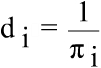
In each stratum primary sampling units are selected using simple random sampling procedure. At the second stage the random sampling of employees is made within each selected local unit.
For each stratum i the inclusion probability of i-th employee in i-th primary sampling unit is
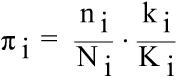
ni– the total number of respondents local units in i-th stratum in the first sampling stage;
Ni – the total number of local units in stratum i in the first sampling stage;
ki – the number of employees in sample from selected local unit;
Ki – the total number of employees in local unit in the second sampling stage.
6.4. Seasonal adjustment
[Not requested]
6.5. Data revision - policy
[Not requested]
6.6. Data revision - practice
[Not requested]
6.6.1. Data revision - average size
[Not requested]
7.1. Timeliness
The length of time between the release of Collection of statistical data and the reference period in Latvia was 23 months.
7.1.1. Time lag - first result
[Not requested]
7.1.2. Time lag - final result
[Not requested]
7.2. Punctuality
In October 2010 the main statistical units of the survey were set and in October of the same year each respondent received a letter containing information on survey: survey period, term of report submission, report indicators and codes of educational attainment.
Design of the questionnaire was finished in October 2010, and with instructions was sent to respondents in January 2011.
Sample was drawn in December 2010. The last corrections of the weights were made in July 2012.
The deadline for delivering the questionnaires to the statistical office was March 1, 2011.
Part of respondents asked for more time because in March and April enterprises are balancing their accounts and it was allowed to deliver the questionnaires later. Rest of enterprises received reminders. At the same time statisticians also telephoned enterprises.
The validation of the micro data was finished by October 2011. The response rate of units at that time is 89.4%.
Afterwards the data were tested also on macro levels, and the transmission files for Eurostat were prepared in July 2012. Some corrections were done in August and September 2012.
Collection of statistical data “Results of the Structure of Earnings Survey 2010” was published in December, 2012.
7.2.1. Punctuality - delivery and publication
[Not requested]
8.1. Comparability - geographical
There are not differences between Latvian and European concepts.
8.1.1. Asymmetry for mirror flow statistics - coefficient
[Not requested]
8.2. Comparability - over time
In SES 2002 enterprises as sampling units instead of local units in Latvia were used.
In SES 2006 and SES 2010 local units were used as sampling units and indicators (wages and salaries, number of employees) were calculated in breakdown by regions of Latvia.
8.2.1. Length of comparable time series
[Not requested]
8.3. Coherence - cross domain
Gross annual earning in the reference year (2010) per employee (code 4.1) constitutes LVL 5616.
Wages and salaries per employee of the NA constitute LVL 5635.
LVL
| NACE sections | National Accounts | SES |
| Wages and salaries per employee | Gross annual earnings per employee | |
| B | 6384 | 5252 |
| C | 4821 | 4990 |
| D | 6977 | 6588 |
| E | 4802 | 5610 |
| F | 6535 | 5110 |
| G | 4698 | 4875 |
| H | 6184 | 6154 |
| I | 3809 | 4099 |
| J | 9968 | 8611 |
| K | 11768 | 11792 |
| L | 5181 | 5024 |
| M | 8126 | 7382 |
| N | 4859 | 5486 |
| O | 7238 | 6909 |
| P | 4848 | 4814 |
| Q | 5509 | 5650 |
| R | 4685 | 4616 |
| S | 3590 | 4535 |
| Total | 5635 | 5616 |
There are the following methodological disparities between “Gross annual earnings in the references year, expressed per employee” (SES) and “Wages and salaries per employee”(NA):
- The SES includes employees on the main job and secondary job, but the NA – only on the main job. NA includes self-employed persons, but SES - not;
- Calculating the wages in SES per employee the wages are adjusted on to a full-time basis. In National Accounts this procedure is not done;
- In National Accounts the adjustments for wages and salaries were madefor non-covered employment and for underreported wages.
8.4. Coherence - sub annual and annual statistics
[Not requested]
8.5. Coherence - National Accounts
[Not requested]
8.6. Coherence - internal
[Not requested]
9.1. Dissemination format - News release
[Not requested]
9.2. Dissemination format - Publications
In October, 2012 the statistical data was published in the collection "Results of the Structure of Earnings Survey 2010".
9.3. Dissemination format - online database
In October, 2012 selected tables of the data collection was published on the Web Page of the CSB.
9.3.1. Data tables - consultations
[Not requested]
9.4. Dissemination format - microdata access
[Not requested]
9.5. Dissemination format - other
The Collection of statistical data “Results of the Structure of Earnings Survey 2010” was sent to all users who ordered the collection of statistical data.
The reporting units can get the information from the bulletin, which is also available in CSB Information Centre.
9.6. Documentation on methodology
Metadata are published in the Collection of statistical data “Results of the Structure of Earnings Survey 2010” and on the Web Page of the CSB.
9.7. Quality management - documentation
[Not requested]
9.7.1. Metadata completeness - rate
[Not requested]
9.7.2. Metadata - consultations
[Not requested]
[Not requested]
11.1. Confidentiality - policy
[Not requested]
11.2. Confidentiality - data treatment
[Not requested]
None
[Not requested]
Not available.
New concept added with the migration to SIMS 2.0.
Information (content) will be available after the next collection.
Not available.
New concept added with the migration to SIMS 2.0.
Information (content) will be available after the next collection.
Not available.
New concept added with the migration to SIMS 2.0.
Information (content) will be available after the next collection.
Not available.
New concept added with the migration to SIMS 2.0.
Information (content) will be available after the next collection.
[Not requested]
[Not requested]
The CSB Statistical Business Register holds information on all enterprises registered in the administrative Enterprise Register of Latvia. In the sampling frame only enterprises from the Business Register economically active in 2010 are included.
The sample for the Structure of earnings survey is formed as stratified two-stage random sample. Local units of enterprises are primary sampling units. Employees are secondary sampling units.
This first stage stratified random sampling was done in December 2010.
Sampling plan for the first stage
The information for employees in enterprises with fewer than 10 employees is included.
The micro data cover NACE Rev.2 section O except armed forces of the Ministry of Defence. Since the Ministry of Defence has not reported the data on armed forces, the employees on military occupations are not included.
The local units of enterprises are stratified according to the 4 size groups of enterprises (1-9, 10-19, 20-49, 50 and over), classification into NACE code groups (2-digit level) and their location into 6 regions of Latvia.
Sampling plan for the second stage
At the second stage employees are chosen from the local units of enterprises selected at the first stage with the following sampling rate: if the number of employees in the local unit ranged from 1 to 50, information had to be rendered on all employees, in case of 51-69 employees – on 50 employees, in case of 70-149 – on 60, in case of 150-249 – on 70, in case of 250-499 – on 80, in case of 500-999 – on 90, in case of 1000 and over – on 8% of the total number of employees in the local unit as of October 31, 2010. If it was more convenient, local units of enterprises could give information on all employees.
But if local unit didn’t give the information on all employees, the selection of employees was started with those born on the 15 day following the selection with the next date until the necessary number of employees was reached.
The length of time between the release of Collection of statistical data and the reference period in Latvia was 23 months.
There are not differences between Latvian and European concepts.
In SES 2002 enterprises as sampling units instead of local units in Latvia were used.
In SES 2006 and SES 2010 local units were used as sampling units and indicators (wages and salaries, number of employees) were calculated in breakdown by regions of Latvia.
