Overview
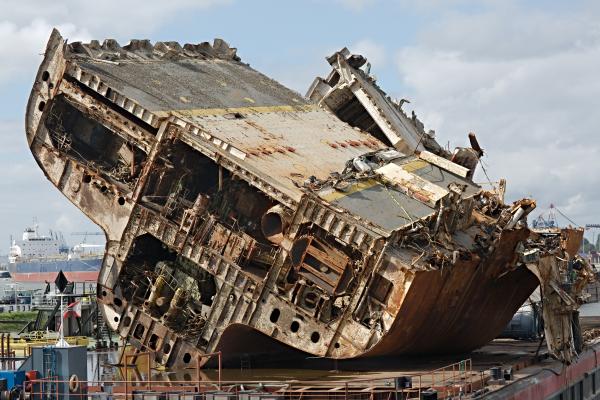
Hundreds of large ships are dismantled in poor environmental and social conditions each year. Workers are low-paid and often have inadequate tools and little protection. This has caused many injuries, deaths and significant pollution.
Background
The EU’s Ship Recycling Regulation is the only dedicated legally binding framework regulating ship recycling. These rules
- lay down requirements for ships and recycling facilities to ensure that ship recycling takes place in an environmentally safe and sound manner
- restrict or prohibit the installation and use of hazardous materials on ships, such as asbestos or ozone-depleting substances
- establish a European list of ship recycling facilities
This Regulation implements the requirements of the Hong Kong Convention for the safe and environmentally sound recycling of ships into EU law, but includes also additional safety and environmental requirements. The Convention was adopted in 2009 and will enter into force on 26 June 2025.
The inventory of hazardous waste materials
EU rules require that any EU ship going for dismantling, all new European ships, and third-country ships stopping in EU ports have on board an inventory of hazardous materials. This inventory must specify the location and approximate quantities of those materials. This helps the recycling of vessels and reduces the presence of toxic materials on board ships. Port authorities of EU countries may control ships to verify whether they carry such an inventory together with a necessary certificate.
Objectives
The EU’s Ship Recycling Regulation aims to prevent, reduce and minimise accidents, injuries and other negative effects on human health and the environment related to the recycling of ships flying the flag of European Union countries.
Law
- Consolidated version of the ship recycling regulation
- Summary of ship recycling regulation
- Decision concerning the ratification of the Hong Kong Convention
Secondary law
- Implementing decision establishing the European list of ship recycling facilities
- Implementing decision on the on the format of the certificate on the inventory of hazardous materials
- Implementing decision on the format of the ready for recycling certificate
- Implementing decision on the format of the report of planned start of ship recycling
- Implementing decision on the format of the statement of completion of ship recycling
Implementation
Member countries are responsible for
- correctly applying and implementing rules on ship recycling
- designating competent authorities and administrations responsible for the application of these rules and notifying the Commission of these designations
- designating contact persons responsible for responding to enquiries
- laying down provisions on penalties for infringements of the rules, and taking all necessary measures to make sure these are applied
- cooperating with other member countries to prevent these rules being broken or evaded
The European Commission and the European Maritime Safety Agency (EMSA) are working closely with EU countries to assist with the implementation of ship recycling rules, and to ensure that these rules are correctly applied. Implementation issues are discussed regularly with EU countries at meetings of the Ship Recycling Regulation Committee and at meetings of the Experts Group on ship recycling.
Guidance on the implementation of ship recycling rules has been developed, specifically:
- Commission Notice Guidelines on the enforcement of obligations under the EU Ship Recycling Regulation relating to the Inventory of Hazardous Materials of vessels operating in European waters
- EMSA’s Guidance on inspections of ships by the port States in accordance with Regulation (EU) 1257/2013 on ship recycling
- EMSA’s Best Practice Guidance on the Inventory of Hazardous Materials
- Guidance Note for Flag States on the Inclusion of Cybutryne in the Inventory of Hazardous Materials required under Regulation (EU) No 1257/2013.
The European list of ship recycling facilities
- From 31 December 2018, ships may only be recycled in one of the facilities listed in the European list of ship recycling facilities. These facilities are located in both EU and non-EU countries, and must comply with a series of requirements related to workers' safety and environmental protection. The list is reviewed and updated regularly to add or remove facilities.
- The national authorities of EU member countries inform the European Commission of the facilities located on their territory that are compliant. Ship recycling facilities located in third countries and intending to recycle ships flying a flag of an EU member country must submit an application to the Commission for inclusion in the European List using this template.
The Commission issued detailed technical guidelines on the requirements and procedure for inclusion of facilities located in third countries in the European List.
Map of the EU-listed yards
Raising awareness
- Press release on implementing decision establishing the eleventh version of the European list of ship recycling facilities
- Press release on implementing decision establishing the tenth version of the European list of ship recycling facilities
- Press release on implementing decision establishing the ninth version of the European list of ship recycling facilities
- Safer ship recycling for a greener world – leaflet
- Press release on implementing decision establishing the seventh version of the European list of ship recycling facilities
- Notice to Stakeholders on Brexit and EU rules on ship recycling
- Press release on implementing decision establishing the sixth version of the European list of ship recycling facilities
- Press release on infringement proceedings launched against nine EU countries for failing to comply with ship recycling rules
- News release on the entry into force of the ship recycling regulation
- 31 December 2023Evaluation of Ship Recycling Regulation
- 15 March - 7 June 2023Public consultation open for feedback
Contribute to the public consultation on the evaluation on the Ship Recycling Regulation
- 31 December 2020Inventory of Hazardous Materials mandatory for all existing EU flagged ships and non-EU ships calling at an EU port or anchorage
- 31 December 2018General date of application of Ship Recycling Regulation
- Inventory of Hazardous Materials now mandatory for new EU flagged ships
- General requirements for shipowners, including requirements for EU flagged ships to go to approved facilities included in the European List, start to apply
- 12 December 2016First publication of the European List of ship recycling facilities
- Inventory of Hazardous Materials made mandatory for EU flagged ships going for recycling
- 20 November 2013Ship Recycling Regulation adopted
Publications
- Commission communication on links between the EU waste shipment rules and the Hong Kong and Basel Conventions
- Science for Environment Policy – thematic issue on the impact of ship recycling
- Report on a financial instrument to facilitate safe and sound ship recycling
- Research project - dismantling of vessels with enhanced safety and technology
- Report - ship breaking and recycling industry in Bangladesh and Pakistan
- Report - the feasibility of a list of “green and safe” ship dismantling facilities and of a list of ships likely to go for dismantling
- Report - support to the impact assessment of a new legislative proposal on ship dismantling. Final report, baseline model and projection
- Options for new initiatives regarding dismantling of ships executive summary, early transposition, ship dismantling fund, existing legislation, annexes, relevant documentation
- Guidelines on selling ships for recycling, transitional measures for shipowners in preparation for the Hong Kong Convention
- Cost-effective and environmentally sound dismantling of obsolete vessels website and final report
- Study on ship dismantling and pre-cleaning of ships
- Ship repair to maintain transport which is environmentally sustainable website and final report
- Report on the safety and health in shipbreaking – Guidelines for Asian countries and Turkey
- Report on the technological and economic feasibility study of ship scrapping in Europe
- RECYSHIP - LIFE pilot project on ship decontamination and recycling
Related links
Main law: Ship Recycling Regulation
Entry into force: 30 December 2013
Related topics: Chemicals Circular economy Maritime Transport Waste and recycling
Related strategies: Circular economy action plan
Related Commission priorities: European Green Deal
Contact
For questions about EU environmental policy, please contact Europe Direct.
Other useful information can be found at
- European Maritime Safety Agency (EMSA) - European Union agency providing technical assistance
- International Ship Recycling Association (ISRA) - international platform for recyclers promoting sustainable ship recycling
- NGO Shipbreaking Platform – global coalition of organisations working to ensure the safe and environmentally sound dismantling of ships worldwide
- Ship Recycling Transparency Initiative (SRTI) – industry initiative promoting transparency to drive progress on responsible ship recycling