






Welcome to the EU EMAS homepage. Today, organisations worldwide are actively addressing their environmental impact, aiming to create a sustainable society. EMAS, the Eco-Management and Audit Scheme, is the perfect tool to tackle these challenges. It was established by the European Commission through the dedicated EMAS Regulation, helping organisations enhance their environmental performance, save energy, and optimise resource usage. It is a premium management instrument to evaluate, report, and improve organisations’ environmental performance.
Join us on this transformative journey towards a greener and more sustainable future. Explore the resources and opportunities offered by EMAS and lead the way in balancing environmental responsibility with business success.
The EMAS for organisations presentation offers an overview of the advantages of being EMAS registered, from optimised internal processes to reduced environmental impacts and greater legal compliance.
Latest news
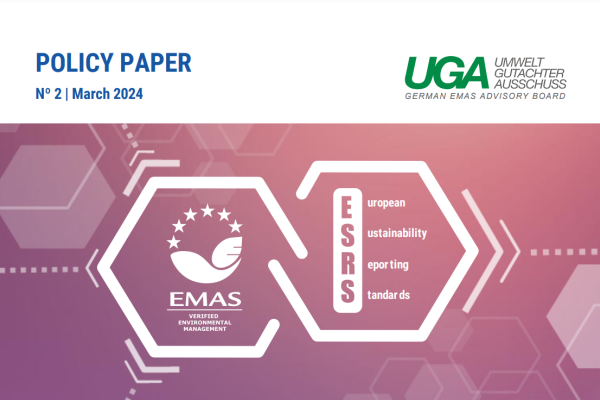
As the first companies are getting ready to report in 2025 for the financial year 2024 under the CSRD, the German EMAS Advisory Board (UGA) publishes a policy paper analysing the synergies and differences between the European Sustainability Reporting Standards (ESRS) and EMAS

EFRAG has published two Exposure Drafts on sustainability reporting standards for SMEs and invites feedback until May 21st, 2024. EMAS stakeholders are encouraged to provide their input.

“How to engage external stakeholders in your company’s sustainable projects? Collaborative initiatives examples
from Epson Iberica”