
DG ECFIN’s analytical and research work brings a scientific contribution to the formal policymaking of the Commission and the other EU institutions. As a complement, DG ECFIN annually publishes on a wide range of topics written by its staff and associated experts to reach out to a wider audience interested in EU economic policy.
Series

Reports prepared by DG ECFIN on the economic situation and economic developments to underpin economic policymaking by the European Commission, the Council of the EU, and the European Parliament. The “European Economic Forecasts” and the “Quarterly Report on the Euro Area” are part of this series.

These papers are written by the staff of DG ECFIN, or by experts working in association with them, to inform the discussion on economic policy and to stimulate debate. They provide for more extensive discussion of a new or open policy issue and may often aim a more technical readership.

These papers are short and concise presentations or analyses of a topical policy item, sometimes in connection to a specific country or a group of countries. They inform discussion and aim to stimulate debate.

In this series, DG ECFIN staff reports on recent developments and indicators. The series comprises the “EU Candidate Countries’ and Potential Candidates’ Economic Quarterly” and “European Business Cycle Indicators”.
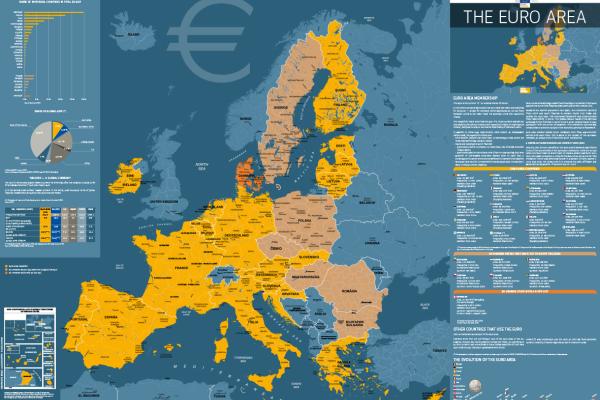
In this series, a euro area map, a booklet, and a poster leaflet give a broad overview and illustrate key milestones of the Economic and Monetary Union, the euro area and the euro.

These off-series publications are reports on specific topics, and compendia bringing together core legal texts on the Economic and Monetary Union and the euro.
Some facts
+ 70
reports and papers
are published every year. The ECFIN catalogue counts more than 500 publications.
4
economic forecasts
are published every year in the winter, spring, summer and autumn
7
search filters
can be used to search for a publication: keywords, publication type, publication date, subject, country, authors, series.