![]() |
|
|
|
| European Commission > Agriculture and Rural Development > CAP Reform > Wine sector | Contact | Search on EUROPA |
![]() |
The reform of the EU's wine sector - Unleashing its potential
Wine labels – giving consumers the information they needEurope is home to the world’s greatest wines and also offers the largest selection. Grown in more than half of the 27 EU Member States, they range from high quality wines from regions such as Bordeaux, Chianti, Rioja, Franken, Douro, Tokaj to name but a few, to many fine wines from other regions. Europe offers wines for all tastes and budgets – in fact, the choice is so vast that many consumers are unfamiliar with most and look for guidance on the label. But the current labelling rules do not allow all wines to indicate some basic and truthful information such as harvest year and type of grapes used – indications that consumers expect to find, and which are displayed on New World wines. Other consumers look for wines from a known wine district. Market studies have shown that the consumers find the existing multitude of geographical indications difficult to understand and are discouraged from discovering the rich diversity of European wines.
Meeting consumer demand: Quality, origin and the best of wine-making practicesFood quality, origin and safety are high on the consumer's agenda. This includes knowledge of what goes into a wine and how it is made. European consumers also want to see the best wine-making traditions preserved whilst embracing technological developments that improve quality, traceability and often also provide better value for money. Origin must be clearly indicated and underpinned by traceability and control systems to avoid cheating. Another challenge is for producers to adapt to evolving consumer tastes and follow the latest best practices in wine making. However, the current system puts our wine producers at a disadvantage. Whilst producers outside the EU can modernize their wine making practices once new methods have been recognised unanimously at the International Organisation for Vine and Wine, EU producers have to wait for Ministers of Agriculture to accept them at EU level – sometimes years later. Meanwhile, their competitors from third countries are gaining market share as they adapt faster to consumer demand.
Enjoying wine – in moderationWine is a wonderful drink, with bewitching aromas and wonderful tastes – but it is also an alcoholic beverage which deserves to be enjoyed in a responsible manner. A new generation of wine consumers focuses on taste and does not associate wine quality with a higher alcoholic content. Market research also shows that there is demand for more low alcohol wines which is also in line with concerns about alcohol consumption for public health reasons.
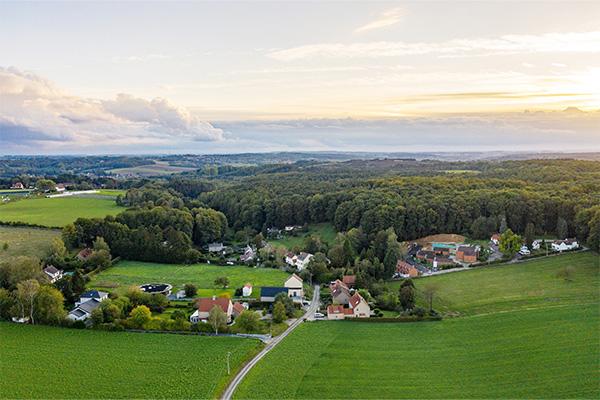
Vineyards – preserving some of Europe's most beautiful landscapesEuropean wines are often associated with the beautiful landscapes in which they grow. Vineyards have shaped their environment and become an integral part of what makes many regions so special. Preserving that environment is important. This is why the Commission wants to ensure that the reform of the wine regime improves the environmental impacts of wine production, in particular as regards soil erosion and contamination, the use of herbicides and pesticides and waste management. Minimising the environmental impact of grubbing up vines is another important aspect. Ceasing production should respect environmental standards and ensure the land is cared for and kept in good agricultural condition. In some particularly vulnerable regions, grubbing up vineyards can pose a threat to the environment, and should therefore be limited or even excluded.
Why do all agree that the EU wine sector must be reformed?Europe is by far the biggest wine producer, exporter and importer in the world. Yet we cannot afford to be complacent because despite the fantastic expertise and hard work that have earned European wines this success, all is not well within the EU's wine sector. While European exports are still growing, New World exports are booming. In countries where more and more people are discovering the pleasures of wine, European producers are not gaining sufficiently large shares of the market. At the same time, Europe is left with large quantities of wine for which there is no outlet. As a result, the EU spends too much money – around half a billion euros a year – on disposing of, storing and distilling wine surpluses into alcohol. This money could be spent better on improving market balance, boosting quality and promoting European wines abroad.
Since June 2006: A year of intense dialogue and listeningWhen preparing the proposal for a wine reform, the Commission
consulted independent experts, governments, winegrowers and
other stakeholders. During the last year, Mariann Fischer Boel,
the Commissioner for Agriculture and Rural Development, has
visited many wine growing regions to listen, learn and share her
views. The main concerns expressed were:
Tackling the root causes of wine surplusesOne of the key objectives is to rebalance the market by reducing the chronic wine surpluses. However, the current financial aids have not proved effective.
Constructive measures adapted to the local wine growers' needsThere are a number of constructive measures that can strengthen the competitiveness of European wine growers. This includes modernising production, improving quality and market orientation through replanting or converting to different vine varieties and promoting wines on export markets as well as providing a safety net for crisis situations. Due to the diversity of Europe's wine sector, the challenge is to tailor local solutions to local needs.
Granting alternatives to less competitive producersMany producers are already or will become competitive by taking advantage of the proposed wine reform. However, some producers have grown dependent on their wine being stored and ultimately destroyed by the EU. In an increasingly competitive market where support is given to constructive measures rather than spent on getting rid of surpluses, they might find it impossible to carry on as before. In an economically difficult situation, wine growers should have the possibility to receive financial support for grubbing up their vines definitely if they choose to do so. They can thereafter convert to other crops of their choice. However, many people have expressed concern about leaving it up to wine makers to decide on the future of vineyards, particularly in environmentally sensitive areas.
Give competitive producers the means to achieve their ambitionsSuccessful wine makers are currently hamstrung by their inability to expand their vineyards – an expansion that would greatly increase their competitiveness by offering economies of scale. Whilst restrictions linked to Geographical Indications make sense, preventing successful wine makers from expanding does not. Since the EU will no longer buy up surplus wine, growers are expected to be more cautious and market orientated when planning their production.
Use existing tools to strengthen the European wine sectorSince 2000, the Commission is co-financing programmes for the development of rural areas with Member States, under which it is possible to support the modernisation of the wine sector. Yet so far, they have not been much used for this purpose. They include start-up aid for young farmers, measures for reducing environmental damage and preserving the countryside, investment aid, processing and marketing support as well as support for older producers' early retirement.
|
|